Mandatory AI Training in Australia — What the APS Standard Means for Private Sector
Jun 09, 2026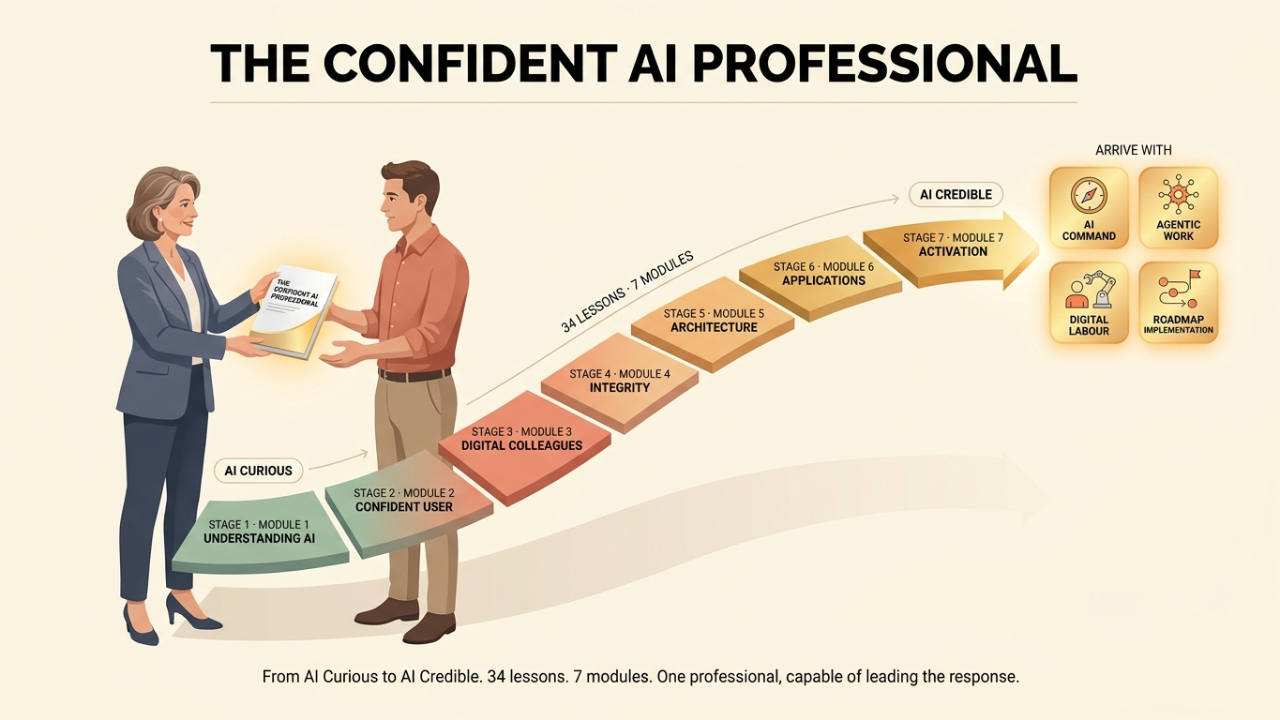
From 15 June 2026, the Australian Public Service starts making AI training mandatory. By the end of the year, every one of the country's roughly 200,000 public servants will have completed it. That is not a pilot. That is not a recommendation. It is a baseline, set by the largest employer in the country, and it changes the conversation for every private-sector board that has been treating AI capability as optional.
The detail matters. Under the APS AI Plan 2025, foundational AI training becomes mandatory for all staff regardless of role, with the first new requirements taking effect on 15 June 2026 and the remainder by December. Every Commonwealth agency is appointing a Chief AI Officer. The training itself is deliberately short — twenty to thirty minutes — and covers responsible and ethical use: identifying types of AI, managing accuracy, bias, sensitivity and transparency.
Read that honestly and two things become clear. The public sector has set a floor. And the floor is low.
The APS has set the floor — not the ceiling
A twenty-minute module that every employee completes is the right instrument for what it is: a consistent, organisation-wide baseline of responsible use. It is compliance-grade AI literacy, and as compliance it is sensible.
But compliance-grade literacy does not deploy Digital Labour. It does not tell a claims team how to redesign cost-to-serve around an agent. It does not help a contact centre leader work out which parts of their queue are safe to automate and which are not. A baseline tells people AI exists and should be used carefully. It does not tell a function what to do on Monday.
This is the gap private-sector leaders should be watching. The APS standard will quickly become the reference point — "are you at least doing what the government does?" — and meeting it will feel like progress. It is the easy 80 percent. The hard 20 percent, the part that actually moves cost and service outcomes, sits above the floor, at function altitude.
Why generic modules stall at the function level
The evidence on where AI value leaks is now unambiguous. Deloitte's State of AI in the Enterprise work finds insufficient worker skills to be the single biggest barrier to integrating AI into existing workflows, with only around a quarter of Australian organisations moving more than 40 percent of their pilots into full production. The most common talent response — cited by a majority of leaders — is raising broad AI fluency across the workforce.
Broad fluency is necessary. It is not sufficient. A whole-organisation module operates at the wrong altitude: it is pitched at the individual user ("here is how to prompt safely") or at the enterprise ("here is our AI policy"), and skips the level where work is actually organised. Functions are where exposure concentrates and where Digital Labour is actually deployed. An HR shared-services team, a safety function, a commercial operations group — each has a distinct set of tasks, a distinct risk profile, and a distinct path from human work to digital work.
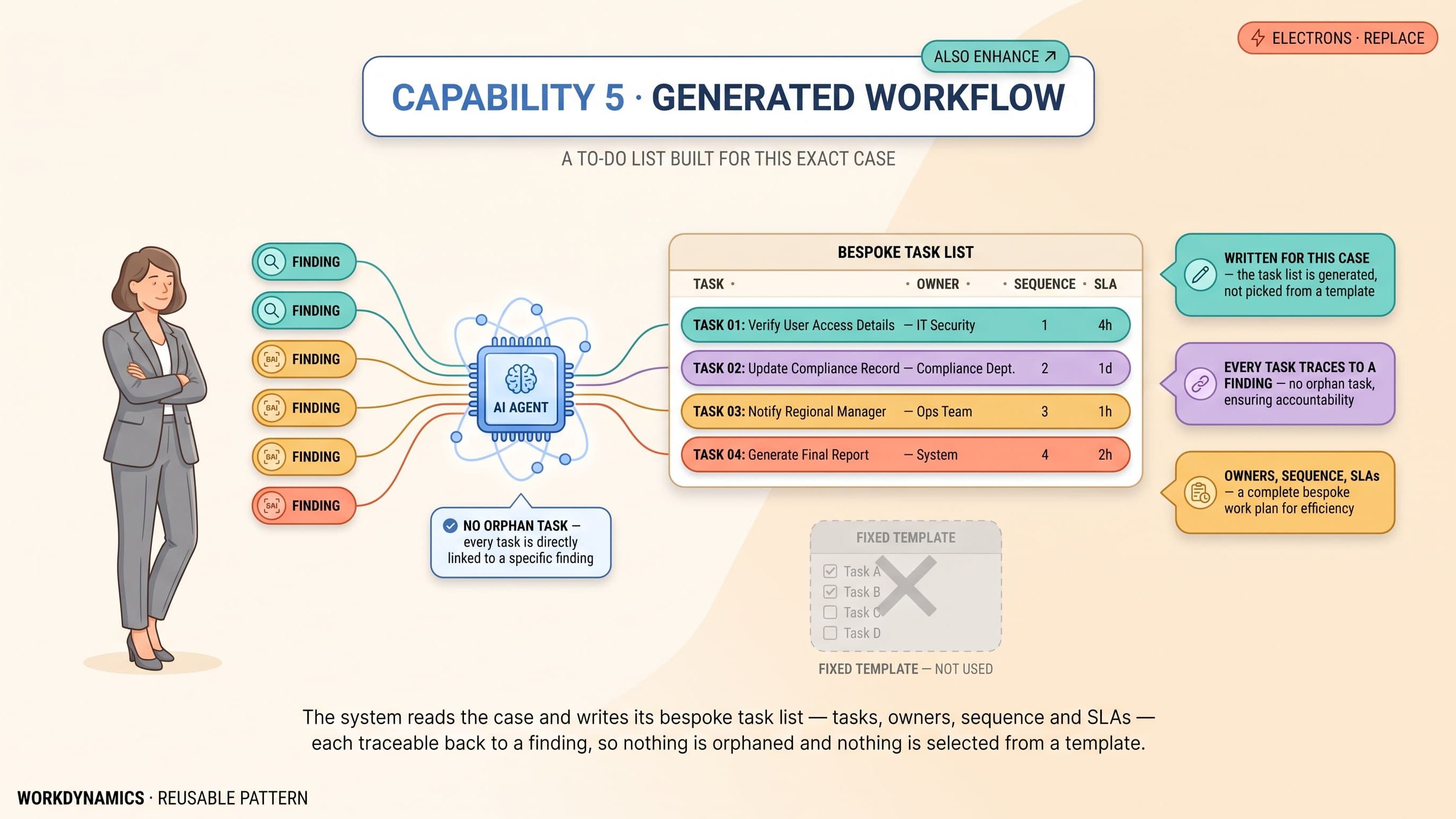
That distinction is the whole game. The analytical move behind every defensible plan is separating the work that must stay human from the work that can become digital — what we call Atoms and Electrons, mapped against the AI Work Spectrum. A generic module cannot make that call for your claims team because it does not know your claims team. Function-altitude training does.
What good actually looks like
Capability that produces deployed Digital Labour, rather than awareness, has a recognisable shape. It is built for a specific function, not the average employee. It teaches people to read their own work — to identify which tasks are exposed, which are defensible to automate, and which carry regulatory weight that keeps them human. It connects literacy to a deployment path, so that training ends in a decision, not a certificate. And it is pitched at the people who own outcomes: the HR director, the WHS lead, the contact centre manager, the claims leader.
That is the design behind The Confident AI Professional. Not a twenty-minute compliance module. Not a generic prompt-engineering course. Function-altitude capability that takes a team from "we've all done the training" to "we know which of our tasks become Digital Labour, and we can defend the call to the board."
There is a governance dividend here too. KPMG's Trust in AI research shows Australian organisations leading the world on AI governance and the responsible-use agenda, even while trailing on productivity. Function-altitude capability closes that specific gap: it converts a strong governance instinct into deployed work, because teams that genuinely understand their own exposure make faster, safer automation decisions than teams relying on an enterprise policy and a hope.
What private-sector boards should do now
Treat the APS baseline as the minimum, and assume your customers, regulators and staff soon will too. The Australian Government's AI Technical Standard already extends in practice to any organisation delivering AI into government — the public-sector bar is becoming a market bar.
So set the floor, then build above it. Roll out broad responsible-use literacy across the whole organisation — match what the APS is doing. Then pick the two or three functions most structurally exposed and give them function-altitude capability that ends in a deployment decision. Your CFO can fund it as a measurable cost-to-serve play, your CIO can architect the governed path, and your board can sign off knowing the capability is defensible rather than decorative.
The mandate has set the conversation. The question for your board is no longer whether to train, but at what altitude — and whether your training ends in a certificate or in deployed work.
See what function-altitude capability looks like at The Confident AI Professional, or start with an honest read of where your functions actually sit.