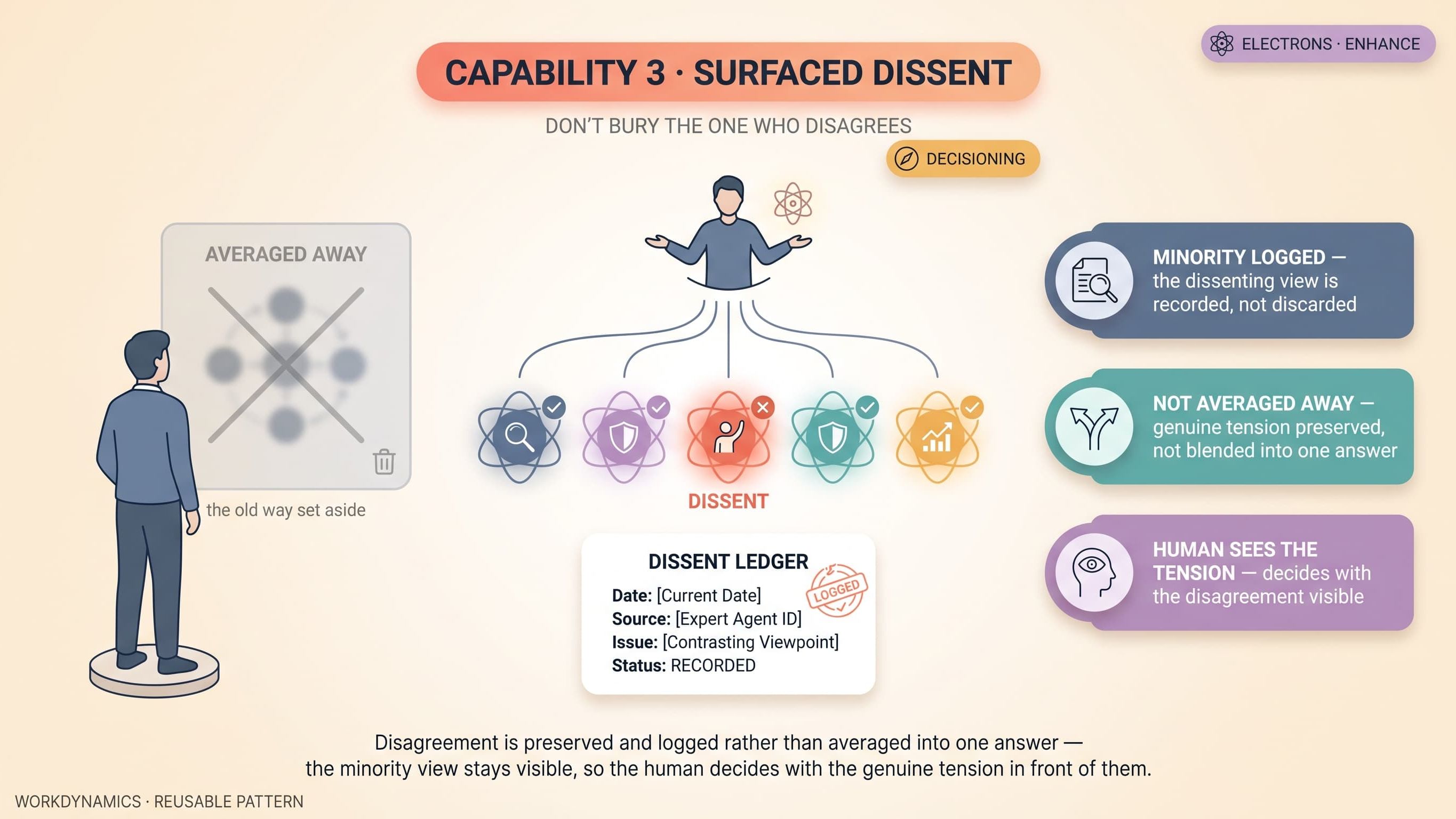
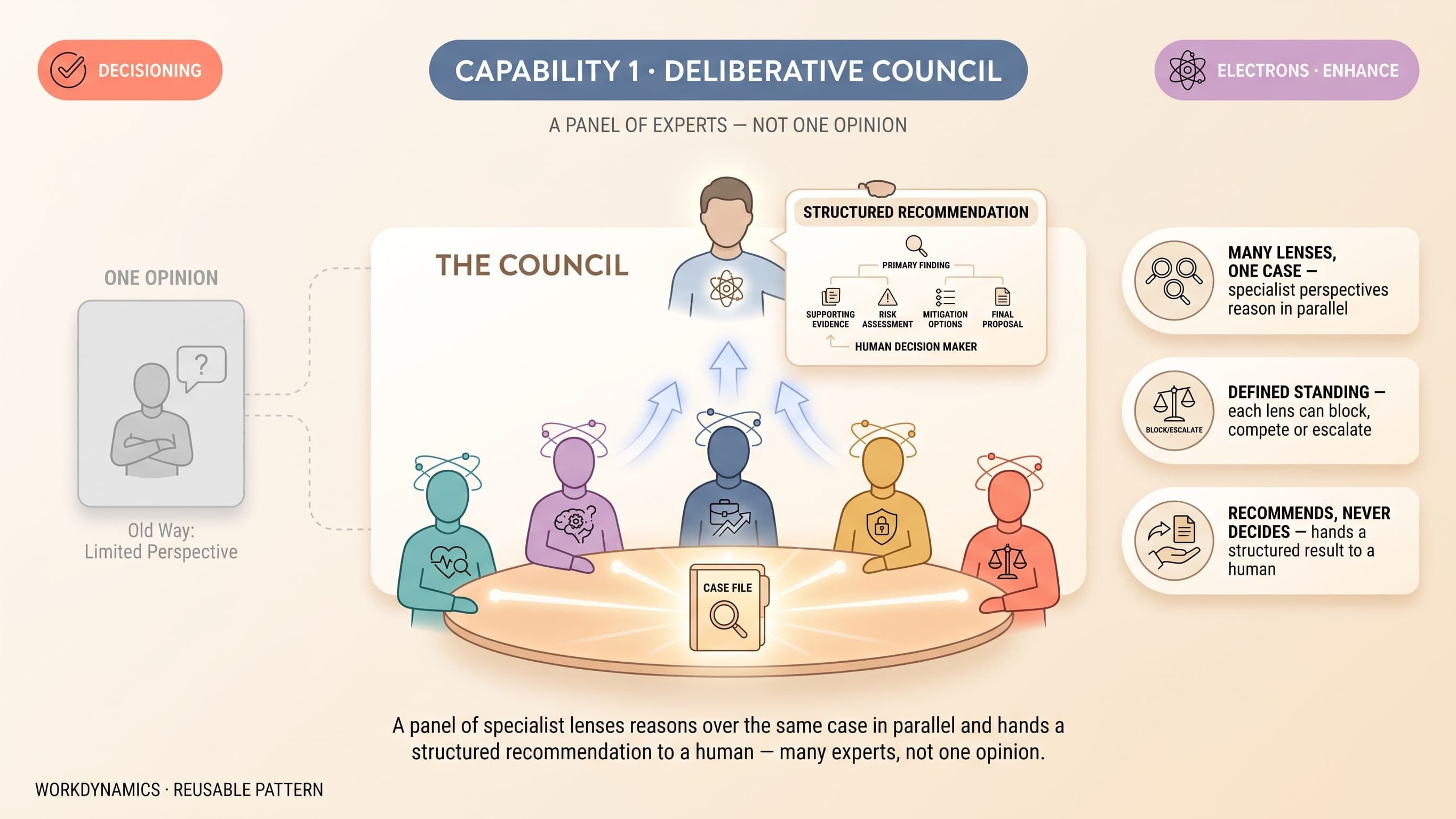
The To-Do List Built for This Exact Case
Jul 04, 2026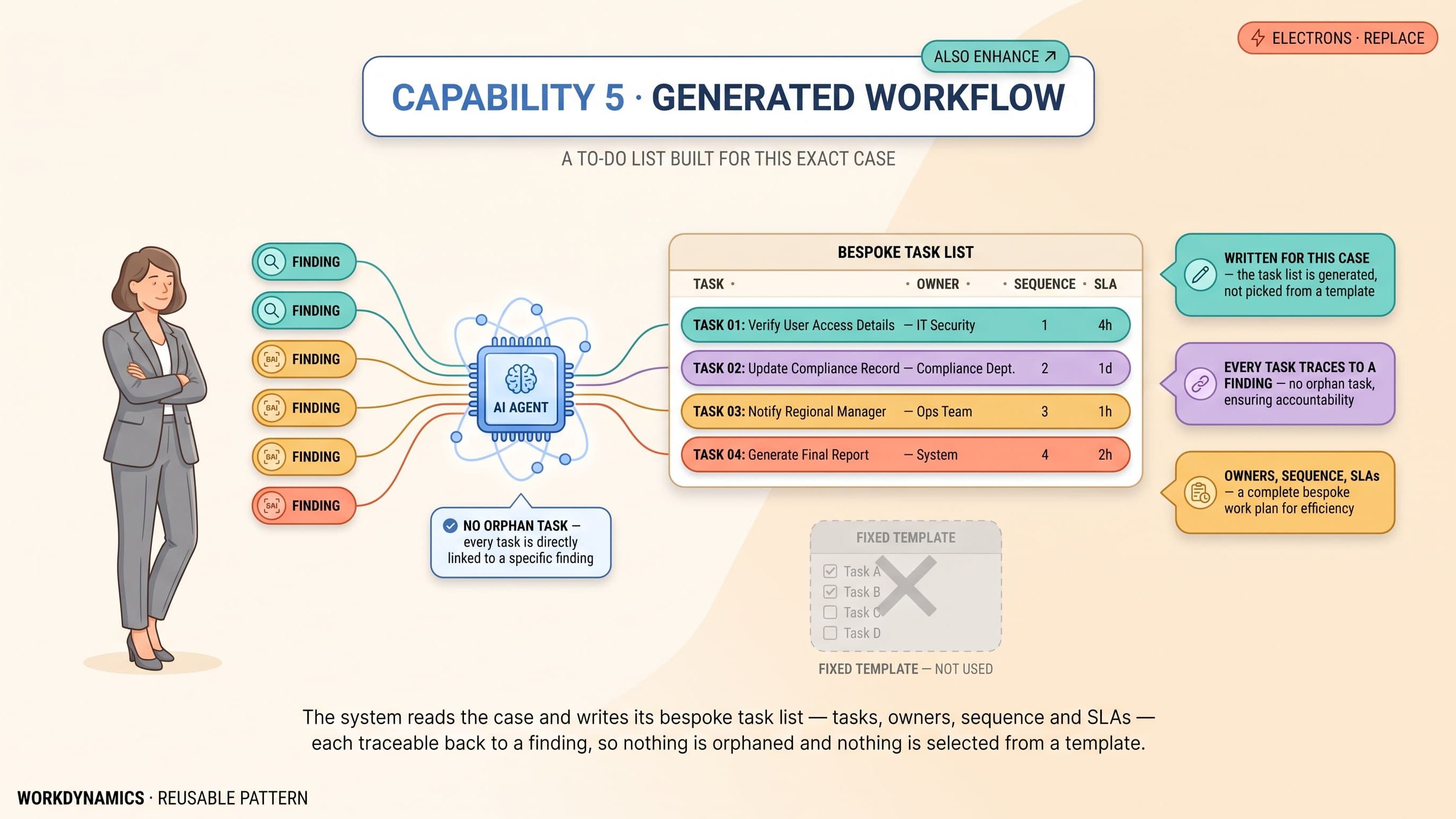
Every legacy function runs on the same quiet fiction: that a template written for the average case fits the case in front of you. It never does. The checklist that governs an injury claim, a complaint, or a safeguarding referral was built for a composite that doesn't exist — so the first real job of every skilled person is to work out which parts of the template to ignore, which steps this case actually needs, and which fields to leave blank. That work is invisible. It's expensive. And it is exactly the work an agentic system takes off the table.
This is the difference a personal copilot never closes. Copilot can draft the email once you've decided what the case needs. It cannot decide what the case needs. That decision — turning a set of findings into the right sequence of tasks — is orchestration, and it is where a function either runs itself or keeps waiting on a person to assemble the plan by hand.
Two capabilities carry this layer. Neither replaces the person who judges the case. Both replace the drudgery of building and re-building the plan around it.
The task list nobody had time to write
Generated Workflow — Replace + Enhance · Orchestration. A generated workflow writes the task list for this case, not the template case. When intake and the record establish the facts, the system composes the specific steps those facts demand — the medical follow-up this injury requires, the notification this complaint triggers, the check this risk signal mandates — and it does so at the point the finding lands, not three days later when someone gets to the file.
The bounded mechanism is what makes it defensible: every task traces back to the finding that created it. No orphan tasks, no steps carried over from a template because "we always do that one," no missed step because the person building the plan was rushed. If a task exists, there is a reason in the record for it, and the reason is attached. This is Replace where it lifts the assembly work off people, and Enhance where it sharpens the plan a person then owns.
It is worth being precise about where the mechanism now lives. Microsoft's redesigned workflows experience in Copilot Studio, with an orchestration layer Microsoft reports improves evaluation performance by around 20% while roughly halving token consumption, means generated, case-specific workflows are no longer a research demo. They run inside the customer's own Power Platform and Dataverse — the tenant you already govern.
Handling shaped to the case, not the template
Per-Case Personalisation — Enhance · Orchestration. The plan is one thing; the handling is another. Per-case personalisation shapes the communications, the timing, and the plan itself to the individual — a first-time claimant who needs more explanation, a vulnerable customer who needs a different channel, a high-complexity case that needs a senior reviewer flagged early — rather than pushing everyone through the same scripted path. Crucially, it does this at scale. The reason legacy functions template everything is that personalising by hand doesn't scale past a point. Remove that constraint and personalised handling stops being a luxury reserved for the loudest cases.
This is an Enhance capability, not a Replace one. It does not decide how to treat the person — it presents handling shaped to the case so the person managing it makes a better call, faster, on every case rather than only the ones they had time for.
Legacy outcome vs Agentic outcome
Legacy outcome: A case manager opens a new file, pulls the standard checklist, and spends the first hour deciding which steps apply, deleting the ones that don't, and adding the ones the template forgot. Every case starts from the same generic plan and gets manually bent toward reality. The bending is skilled work — and it's the work that never shows up in a process map, so it's never resourced, so cases queue behind it.
Agentic outcome: The moment intake and validation complete, a case-specific workflow already exists — every task justified by a finding, the handling already shaped to who this person is and how complex the case is. The case manager doesn't build the plan. They review a plan that was built for this exact case, adjust what their judgement tells them to adjust, and spend their hour on the decision only they can make. The function stops queuing behind plan-assembly it should never have been doing by hand.
This is the Atoms and Electrons move in practice: the electron work — composing and re-composing the plan — moves to the system; the atom work — judging the case — stays with the person. And it sits squarely in the orchestration band of the AI Work Spectrum, the layer between raw retrieval and human decision that legacy functions have always run on manual labour.
Where the human still holds the pen
A generated workflow proposes; it does not execute anything consequential on its own. Task lists that write records, send communications, or trigger downstream action pass a human gate first — nothing consequential writes or sends without a person's yes. Humans on judgment. Agents on the rest. The capability is powerful precisely because it is bounded by design, and because it runs inside your Microsoft environment where every generated step is captured in the record.
This matters more, not less, as the regulator catches up. The NSW Work Health and Safety Amendment (Digital Work Systems) Act 2026 now places specific duties on organisations that use algorithms and automation to allocate work — which is precisely what a workflow generator does. A system that traces every task to a finding isn't just more efficient; it's the evidence trail that turns "we allocate work with automation" from a liability into a defensible position.
What it's worth
The hard line: in the Functional Agentic Roadmap sample for a 30-person injury management function, orchestration capabilities like these contribute to a roughly 14-month payback and an illustrative +352% three-year ROI — with headcount moving from 30 to 25 and throughput headroom of 40–130%. (Indicative methodology output, not a client result.) The soft line: the time returned doesn't disappear — it flows to the high-stakes case conversations that should grow from 12% of a case manager's time toward 18–22%. You retain senior judgement and let it do more of the work only it can do.
That is the through-line of this whole series: replace the work, enhance the decision. A generated workflow replaces the plan-assembly. Per-case personalisation enhances the handling. The case manager keeps the pen.
If your function still builds its plans by hand — one template, bent toward reality one case at a time — that's the exposure worth sizing. Bring your own numbers to From Exposure to Command, our fortnightly live session for leaders, and see which orchestration surfaces in your function are still running on manual labour: reserve a seat here.