From AI Strategy to Deployed Digital Labour — Closing the Activation Gap
Jun 10, 2026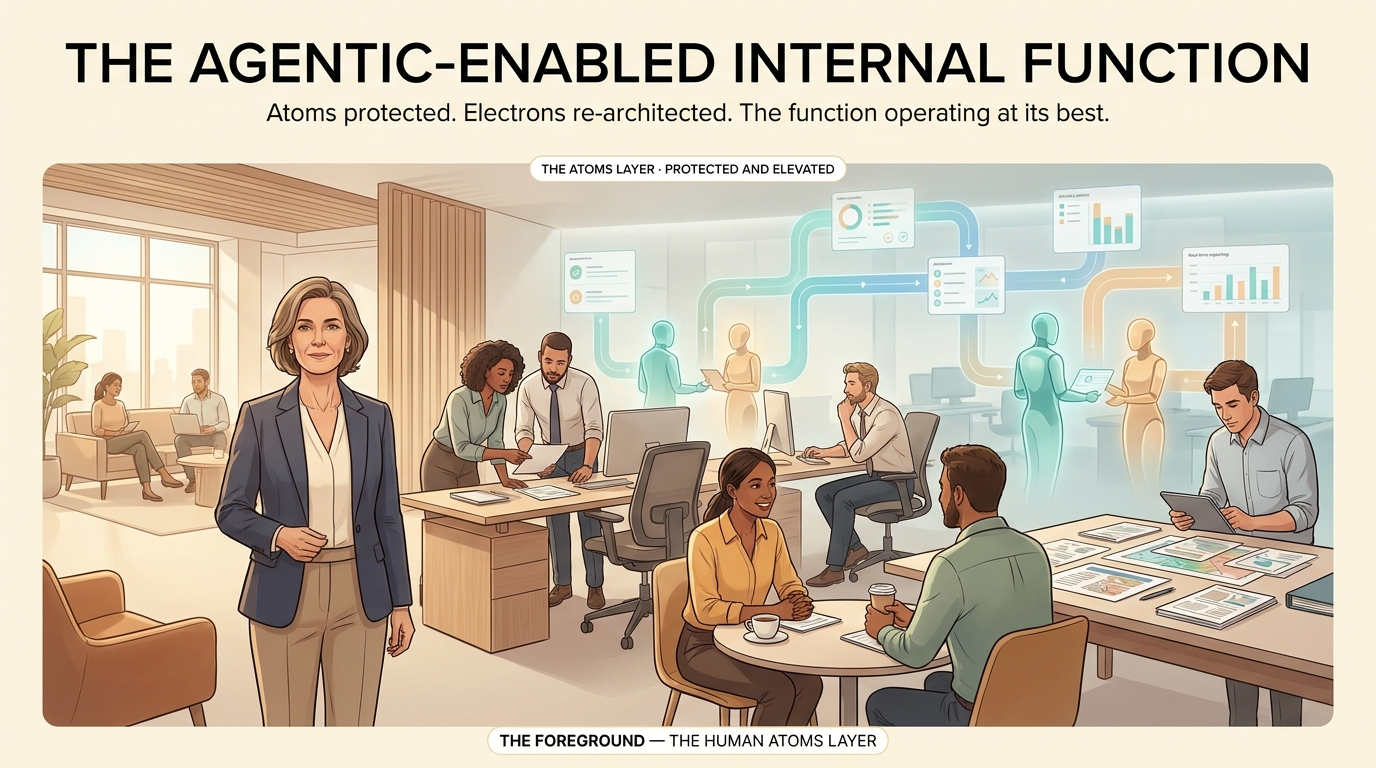
Most organisations do not have an AI strategy problem. They have an activation problem. The decks are written, the principles are signed off, the steering committee meets monthly — and almost nothing has been deployed into the actual flow of work. The gap between a strategy your board approved and digital labour running inside a function is where most AI ambition quietly dies.
That gap has a name, and it is now measurable. MIT Sloan's 2025 research found that 95% of generative AI pilots never scale into production. Gartner estimates that roughly 85% of AI initiatives never reach production at all. McKinsey puts the share of companies achieving measurable business impact at 10 to 15%. These are not technology failures. They are activation failures.
Strategy Is Not the Bottleneck — Activation Is
For two years the boardroom conversation has been about whether to act. That question is settled. The harder question — the one that separates organisations now banking returns from those still circulating slideware — is how a single function actually moves from intent to deployed capability.
Strategy operates at altitude. It tells you the organisation should "embrace AI" or "build an agentic workforce." Useful, but you cannot deploy a principle. Digital labour is deployed at function altitude: in claims, in the contact centre, in workforce administration, in safety and wellbeing. The activation gap is the distance between those two altitudes — and it does not close on its own.
Deloitte's 2026 State of AI survey found that 42% of companies abandoned at least one AI initiative in 2025, with the average sunk cost of an abandoned initiative reaching US$7.2 million. The common thread in those write-offs is rarely a bad model. It is a pilot that was never designed to become production, owned by a single team, with no path from experiment to deployed digital labour.
What an AI Activation Program Actually Does
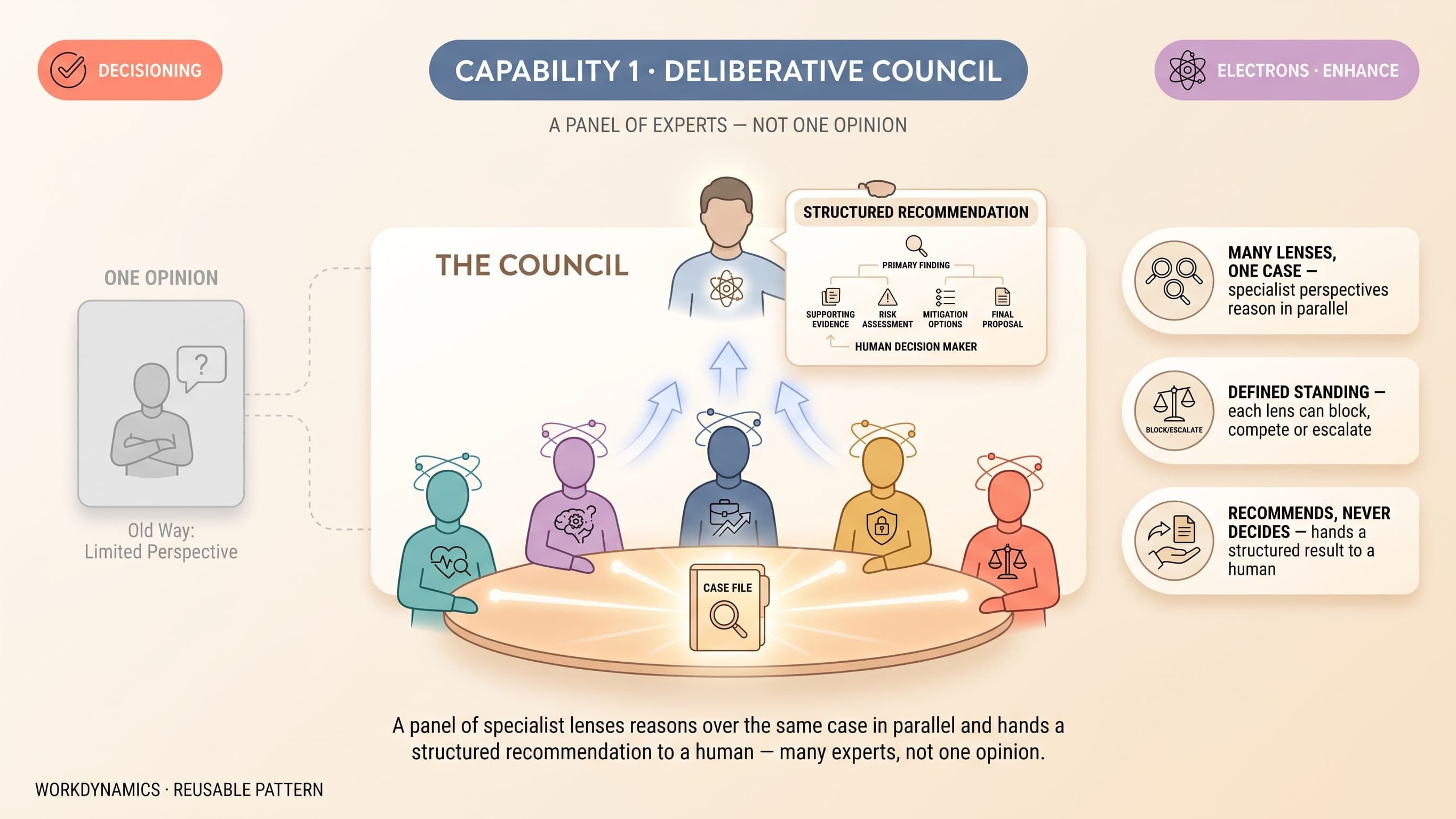
An AI activation program is not a strategy deck. Not a maturity model. Not a pilot. It is the structured path that takes one function from a defensible blueprint to deployed, governed digital labour — and it does three things a strategy cannot.
First, it sequences the work. A defensible plan separates the tasks that can be automated now from the ones that cannot — the Atoms and Electrons move that sits behind every credible roadmap. Activation takes that separation and turns it into a build order: what ships first, what depends on what, where the data has to be clean before an agent can touch it.
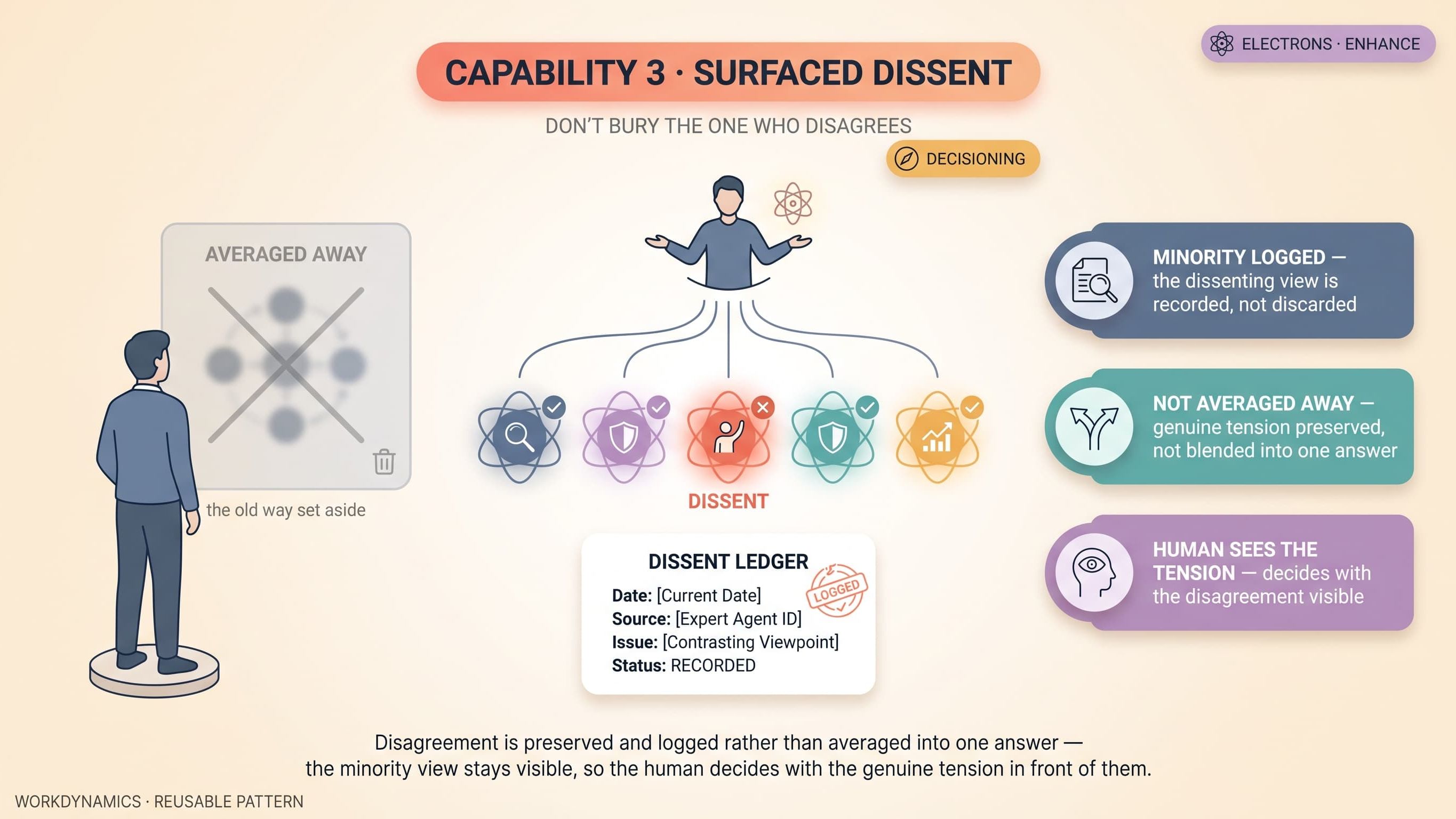
Second, it governs from day one. The Australian Government's Guidance for AI Adoption, published in October 2025, sets out six essential practices for safe and responsible AI. December 2025's National AI Plan confirmed Australia will rely on existing laws and sector regulators rather than a standalone AI Act — which means accountability for AI sits with your existing governance, not a future regulator. A governed activation program builds that accountability into the deployment. Shadow AI does the opposite.
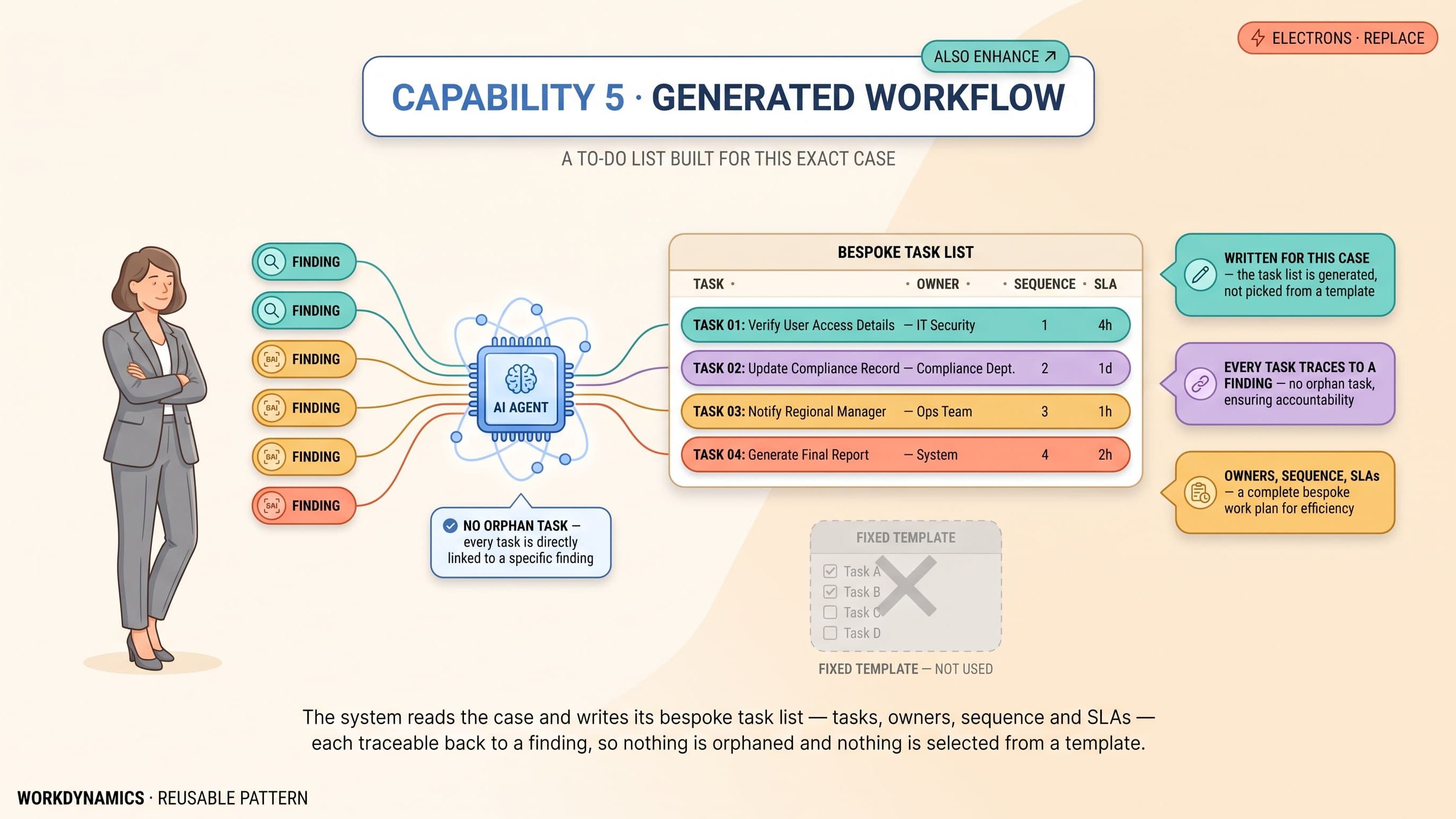
Third, it produces something that runs. The output of activation is not a recommendation. It is digital labour operating inside a tenant — built on Microsoft Power Platform, Copilot Studio, and Dataverse, deployed where the work already happens, and measured against cost-to-serve and service responsiveness rather than novelty.
From Blueprint to Deployed Labour
The discipline here is sequencing, not ambition. A Functional Agentic Roadmap gives you the defensible blueprint — the honest read of where a function sits on the AI Work Spectrum and what credible response looks like. Activation is what turns that one artefact into a deployment your CFO can fund, your CIO can architect, and your board can sign off.
The sequence is deliberately unglamorous. Pick one function. Take its blueprint. Stand up the environment. Migrate the data that the first workflow depends on. Build the business logic. Deploy the first agent into a real process with a human accountable for the outcome. Measure. Then expand to the next workflow — not the next function. The organisations escaping pilot purgatory are the ones treating activation as a repeatable production discipline, not a series of disconnected experiments.
This is why owning a pilot inside a single team is so often fatal. Deloitte found that over 60% of AI pilots sit with one team — which is exactly the structure that cannot scale. Activation is a function-altitude commitment: the function head owns the outcome, the CIO owns the architecture, and the work is built to run beyond the pilot from the first sprint.
The Honest Read
If your organisation has an approved AI strategy and nothing deployed, you do not need more strategy. You need activation. The decks are not the asset. The deployed digital labour is.
The most useful next step is narrow: choose a single function — claims, contact centre, workforce administration, safety and wellbeing — and ask what it would take to move that one function from blueprint to deployed digital labour in 90 days. That is the question an activation program is built to answer.
Next action: If you have a strategy but no deployed labour, start with LEEP — the structured path from defensible blueprint to governed digital labour at function altitude. Bring one function. Leave with a deployment plan your CFO, CIO, and board can all sign.