AI Literacy for HR and People Leaders — What Good Actually Looks Like
Jun 08, 2026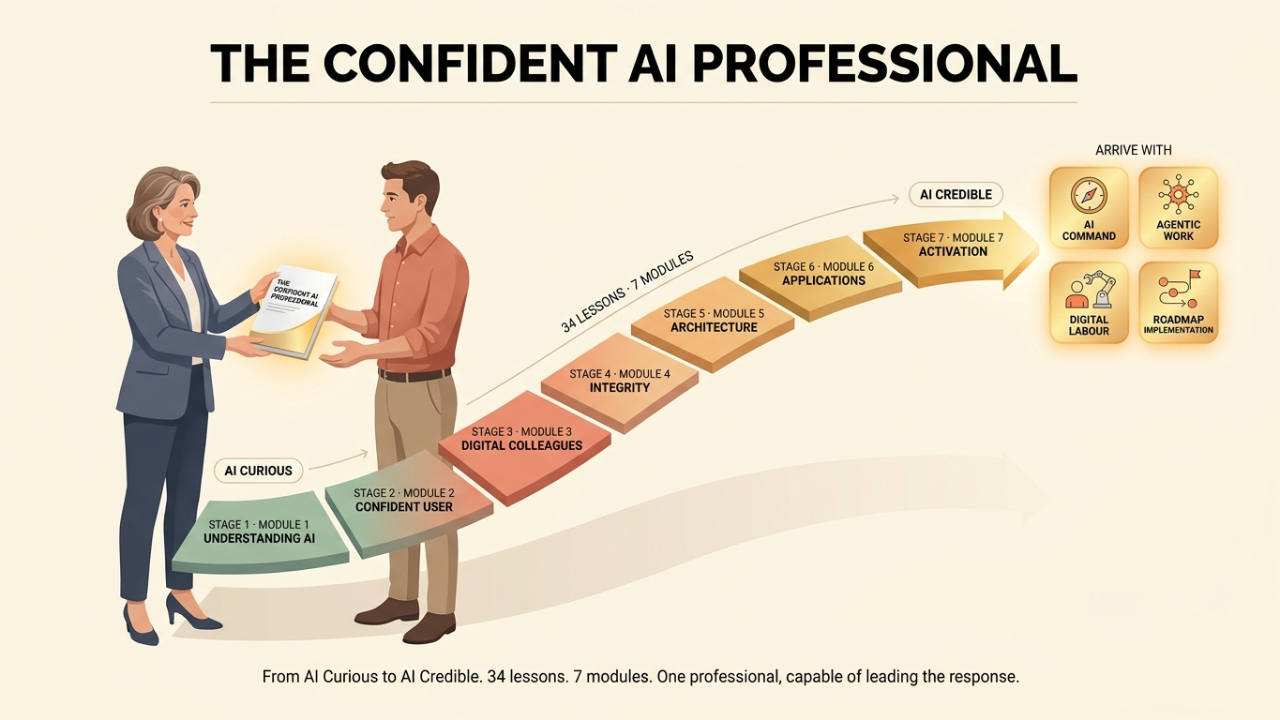
Most AI training teaches the tool. Almost none of it teaches the work.
AI literacy has become the line item every HR Director is expected to own in 2026. The board wants assurance the workforce is capable. The CIO wants users who don't create governance incidents. The executive team wants someone to "sort out AI training." And what most organisations buy in response is a prompting workshop.
A prompting workshop is not AI literacy. It is tool familiarity — useful, cheap, and nowhere near sufficient for the people who have to lead a function through the arrival of Digital Labour.
The honest read: most HR and people leaders are being asked to govern something they have not yet been equipped to understand. Not at the level of writing better prompts. At the level of knowing what AI is actually doing to the structure of work in the functions they lead.
The gap is measured, and Australia sits at the bottom of it
The KPMG and University of Melbourne global study on trust in AI surveyed more than 48,000 people across 47 countries. Australia recorded some of the weakest results anywhere: only around 36 per cent of Australians are willing to trust AI, just 30 per cent believe the benefits outweigh the risks — the lowest share of any country surveyed — and Australians ranked last globally in interest in learning more about AI.
Meanwhile, 65 per cent report their employer already uses AI, and roughly half of employees use it regularly themselves.
Read those numbers together and the picture is structural, not attitudinal. AI is already operating inside Australian organisations — often ungoverned, often unacknowledged — while the workforce trusts it least and wants to learn about it least. That gap does not close itself. It closes when someone with a people mandate treats literacy as capability infrastructure rather than a compliance tick.
That someone is HR.
Government has already named the standard — the private sector inherits it
The Commonwealth has moved first. Under the APS AI Plan, every Australian public servant — roughly 200,000 people — completes foundational AI training, agencies appoint Chief AI Officers accountable for literacy and risk, and the official guidance on staff AI training sets out what that training must cover. The APS Commission has been explicit that HR professionals must understand what AI is, how it works, and how it is applied responsibly — and that HR carries the job of supporting leaders to create safe adoption environments.
When government sets a workforce standard at that scale, the private sector inherits the benchmark — through procurement expectations, through regulator posture, through the labour market itself. The question your board will ask is not "do we have AI training?" It is "would our training survive comparison with the standard government just set for itself?"
For most organisations, the answer today is no.
What genuine AI literacy looks like at function altitude
Strip away the vendor noise and good AI literacy for HR and people leaders comes down to five capabilities. Not awareness. Capabilities.
Read your function's position. A literate people leader can place their function on the AI Work Spectrum — where AI is already active, where exposure is concentrated, and where the gaps sit across People, Safety, Compliance and Workforce Administration. Without that baseline, every training decision is a guess.
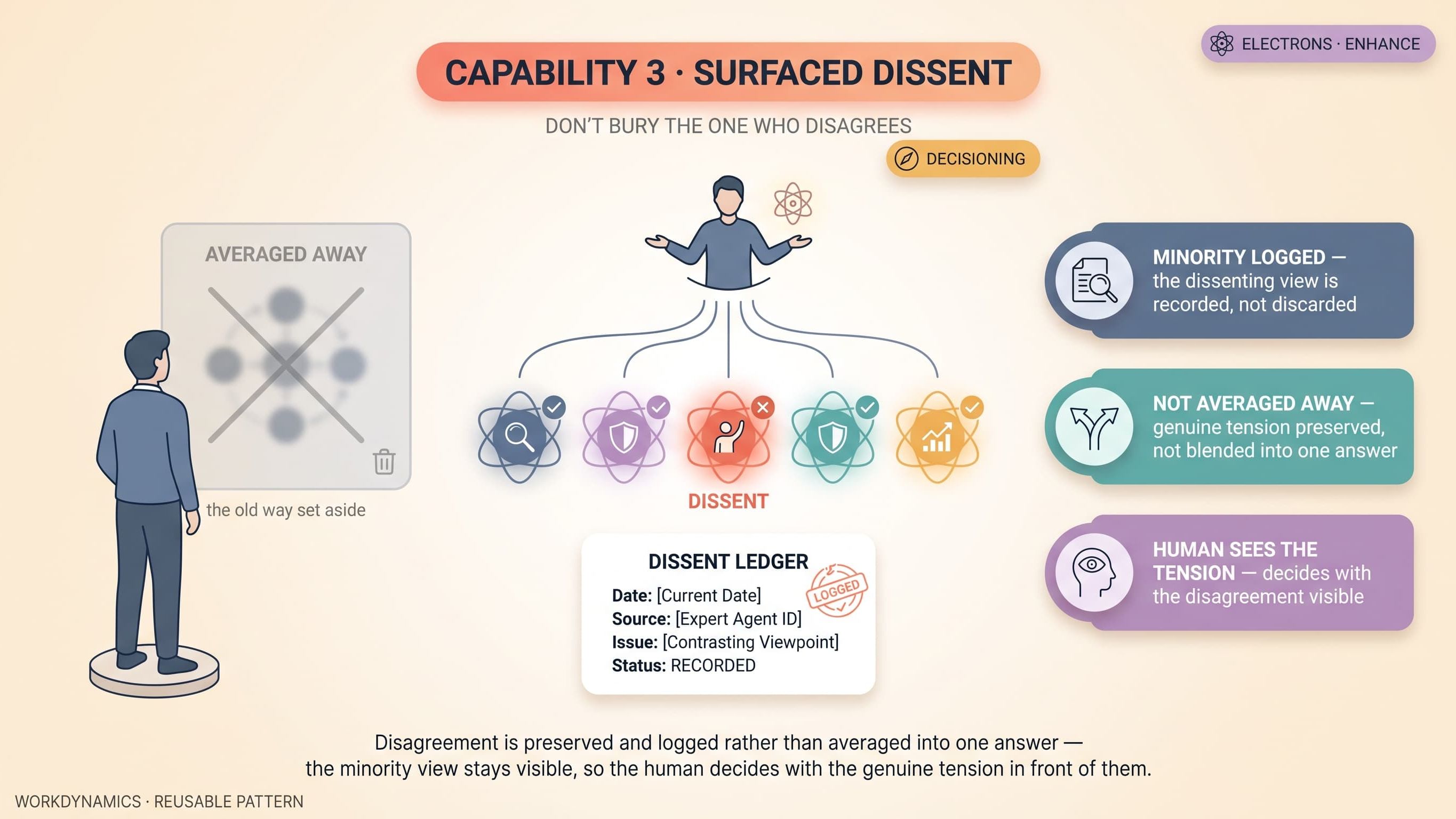
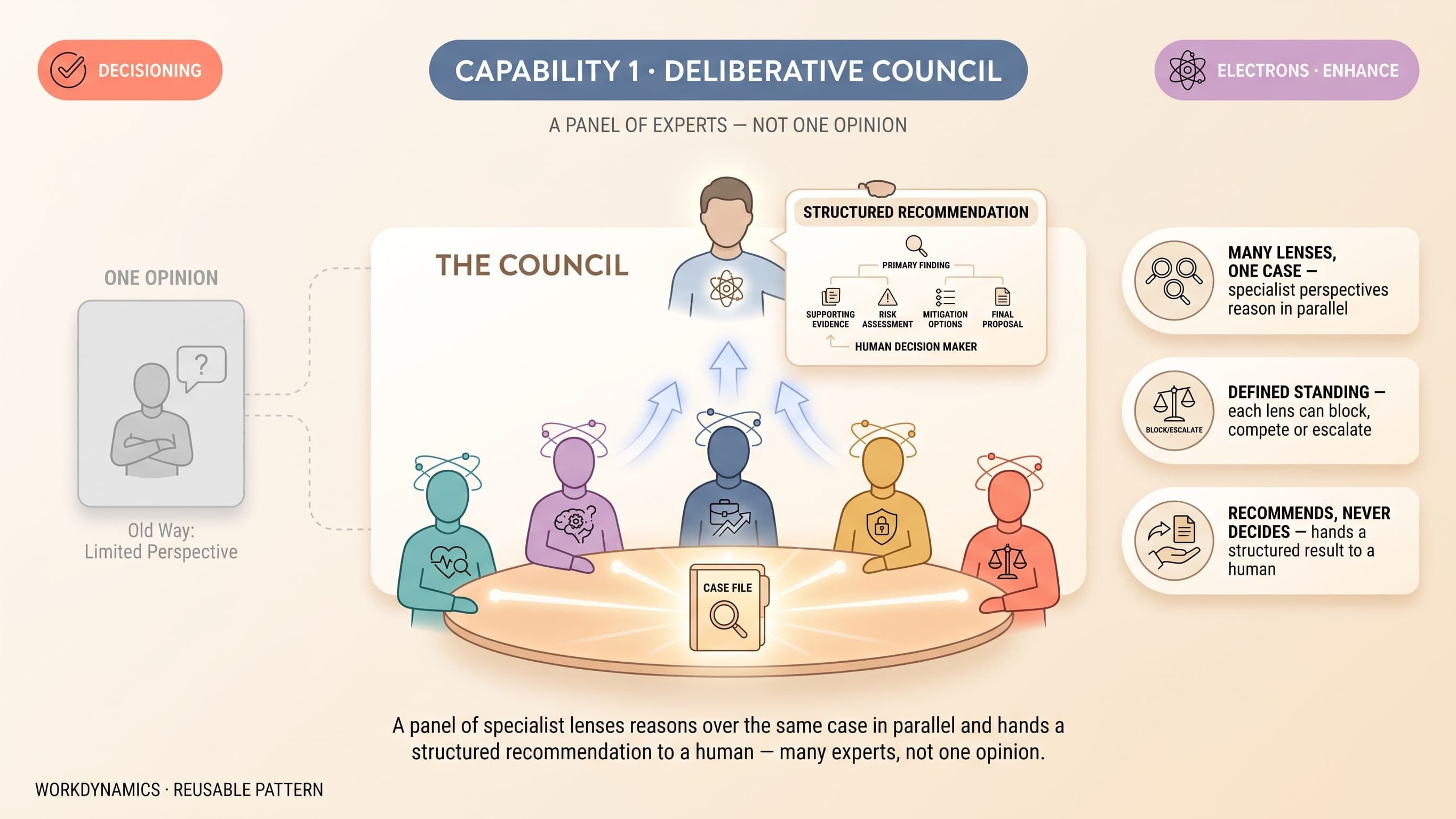
Split the work honestly. The Atoms and Electrons lens divides every role into work whose value depends on being human — judgment, trust, the hard conversations — and work whose value is in the output. Literate leaders can run that split on their own teams and defend it. That is what makes workforce design decisions structurally defensible rather than reactive.
Govern with reference to the actual standards. The Australian Government AI Technical Standard, the Voluntary AI Safety Standard, human-in-the-loop oversight for high-consequence decisions — these are the frames a people leader needs when an AI agent touches recruitment, performance, injury management or safeguarding. "We trusted the vendor" is not a governance position.
Speak the stack credibly. Not to build it — to engage the CIO as a peer. A people leader who understands what Copilot Studio, Dataverse and Agent 365 actually do can shape how Digital Labour enters their function instead of having it arrive as a fait accompli.
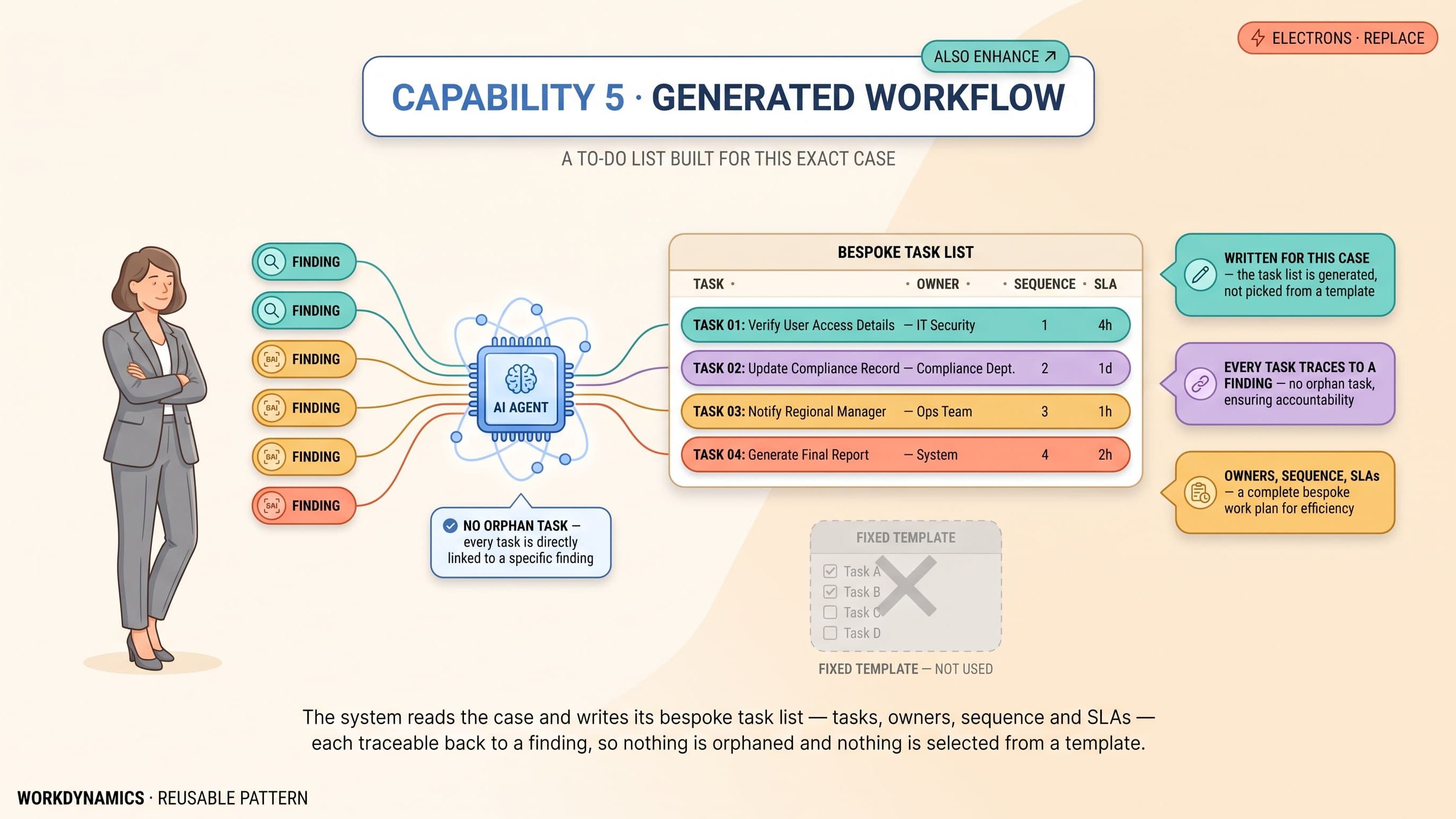
Lead the activation, not just the training. Literacy that ends at course completion is shelfware. The end state is a leader who can represent their function's AI response to the executive — what credible response looks like, what it costs, and what it returns in cost-to-serve and service responsiveness.
Tool tips don't produce that. A curriculum does.
Why this lands on HR first
Every function has AI exposure. HR has it twice — once as a function whose own work is being restructured, and again of capability across every other function. When the claims team, the contact centre and the safety team all need literate leaders, the build sits with the people function.
That makes AI literacy a boardroom conversation, not a learning-and-development line item. The leaders who can frame it that way — capability infrastructure for an organisation that will be operating Digital Labour within the planning horizon — are the ones who will hold the mandate. The ones who outsource it to a prompting workshop will be explaining the gap later.
Not a tool demo. Not a lunch-and-learn. A structured path from AI curious to AI credible.
Where to start
The Confident AI Professional is the literacy program built for exactly this — 34 lessons across 7 modules, grounded in the Australian Government AI Technical Standard, built for the Microsoft environment, and written for leaders in employee services and external services. No prior AI experience required. Module 1 is free.
Start there. Place your function, run the split, and build the literacy your mandate now assumes you have.