You Have Copilot. You Don't Have a Function That Runs Itself.
Jun 30, 2026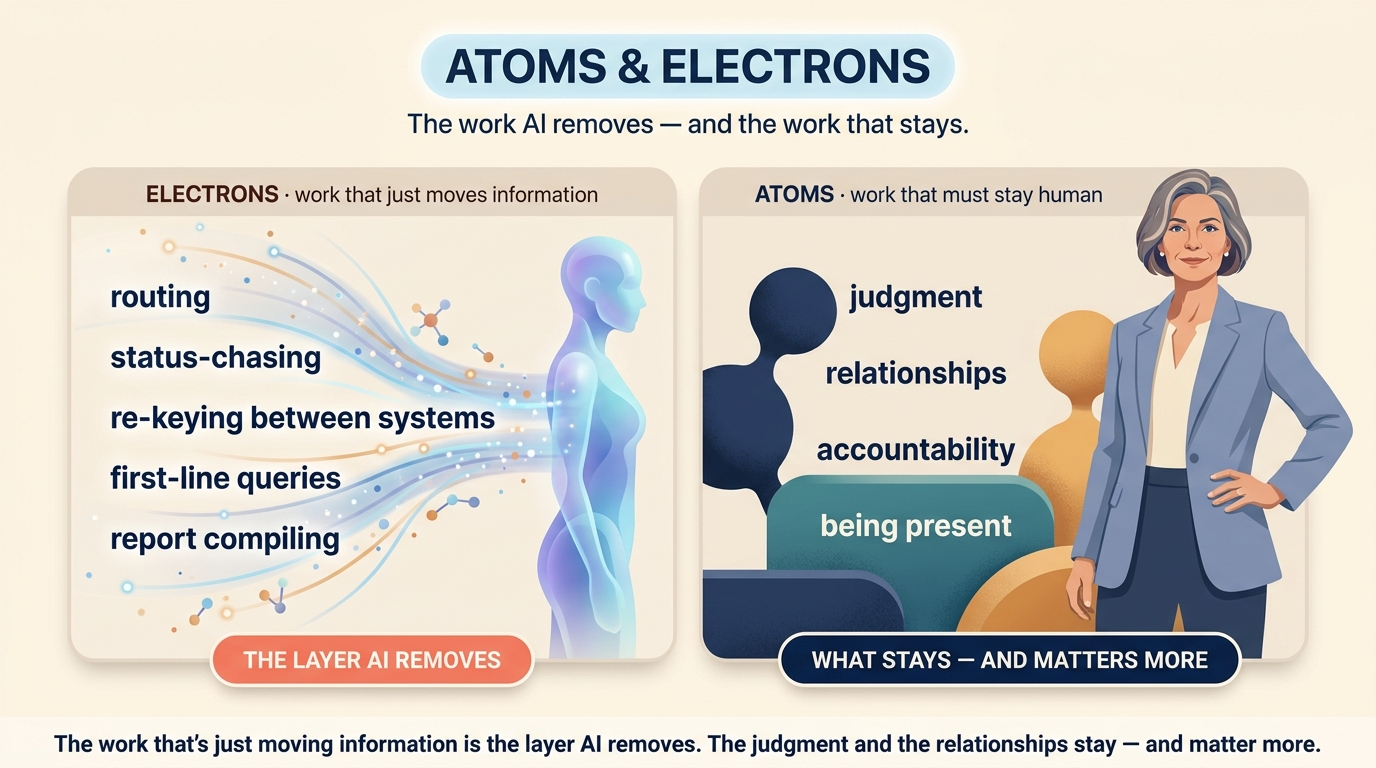
Your organisation has Copilot. Most of your people have used it this week — a meeting summary here, a first-draft email there, a spreadsheet formula they couldn't quite remember. It is genuinely useful, and it is genuinely not the same thing as a function that runs itself.
This is the distinction that decides whether your AI spend ever shows up in the numbers the board cares about. Copilot makes individual people faster at their own tasks. It does not change what your function produces, what it costs to serve, or how defensible it is to a regulator. Those outcomes are set one altitude up — at the level of the function, not the individual — and personal productivity tools, by design, never reach them.
Copilot made your people faster. It didn't change what your function produces.
The evidence on this is now hard to argue with. Microsoft 365 Copilot has crossed 100 million users and sits inside roughly 70 per cent of the Fortune 500 — and yet 74 per cent of companies using AI tools still can't show tangible business value from the investment. That is not a product failure. It is an altitude failure. A tool licensed to individuals produces individual gains, and individual gains do not aggregate into function outcomes. Ten case managers each saving twenty minutes a day is a real saving for ten people. It is not a faster, cheaper, or more defensible claims function.
The reason is structural. Personal productivity stays personal. The time your people save is reinvested unevenly, invisibly, and at their own discretion. None of it changes the workflow architecture, the cost-to-serve, or the risk posture of the function as a whole. The work still flows the way it always did — it just has slightly faster humans pushing it through.
Legacy outcome: Your people use AI to do their existing work faster. The function's throughput, cost-to-serve, and audit position are unchanged. Improvement is a personal habit, not a structural property.
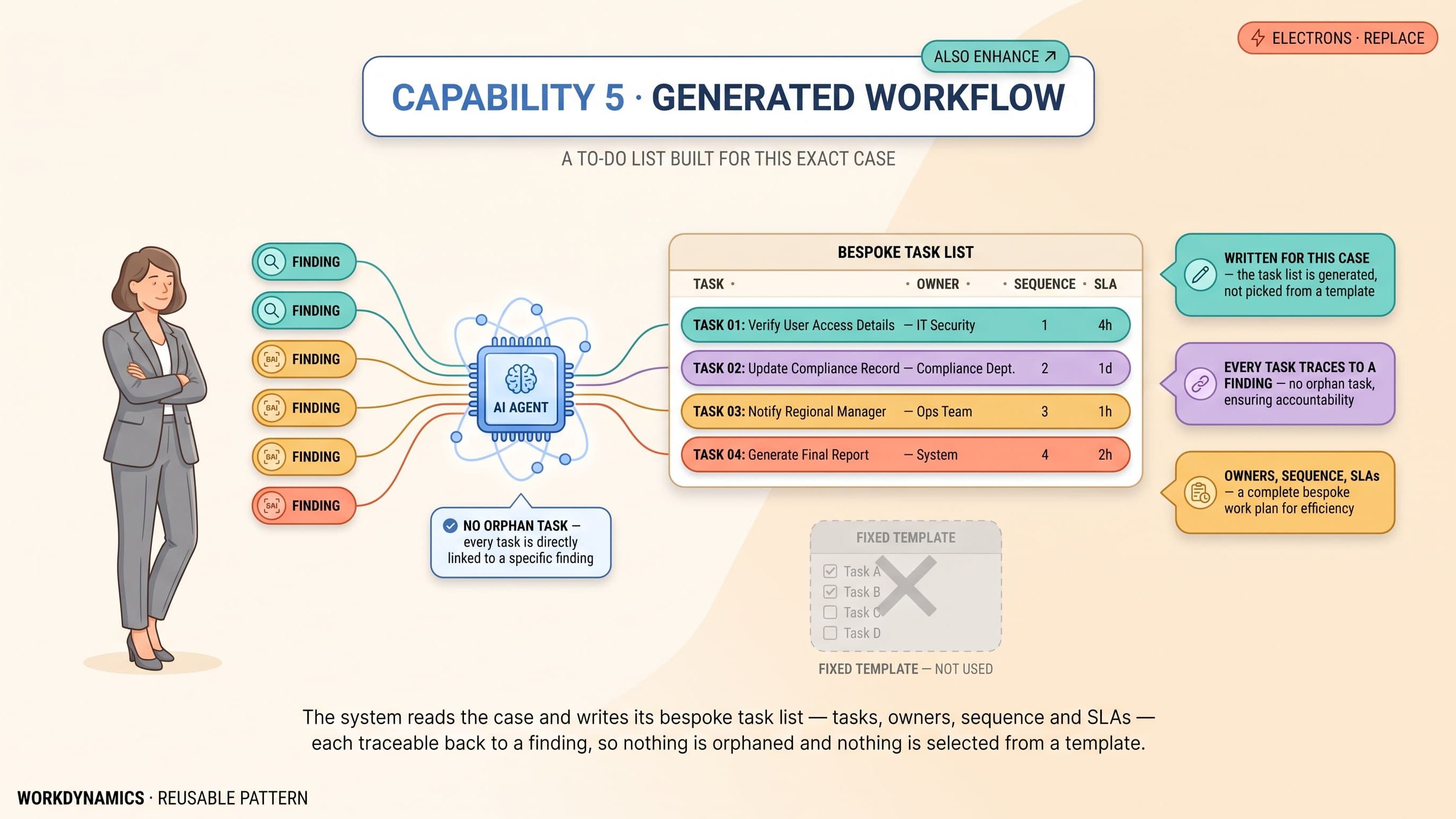
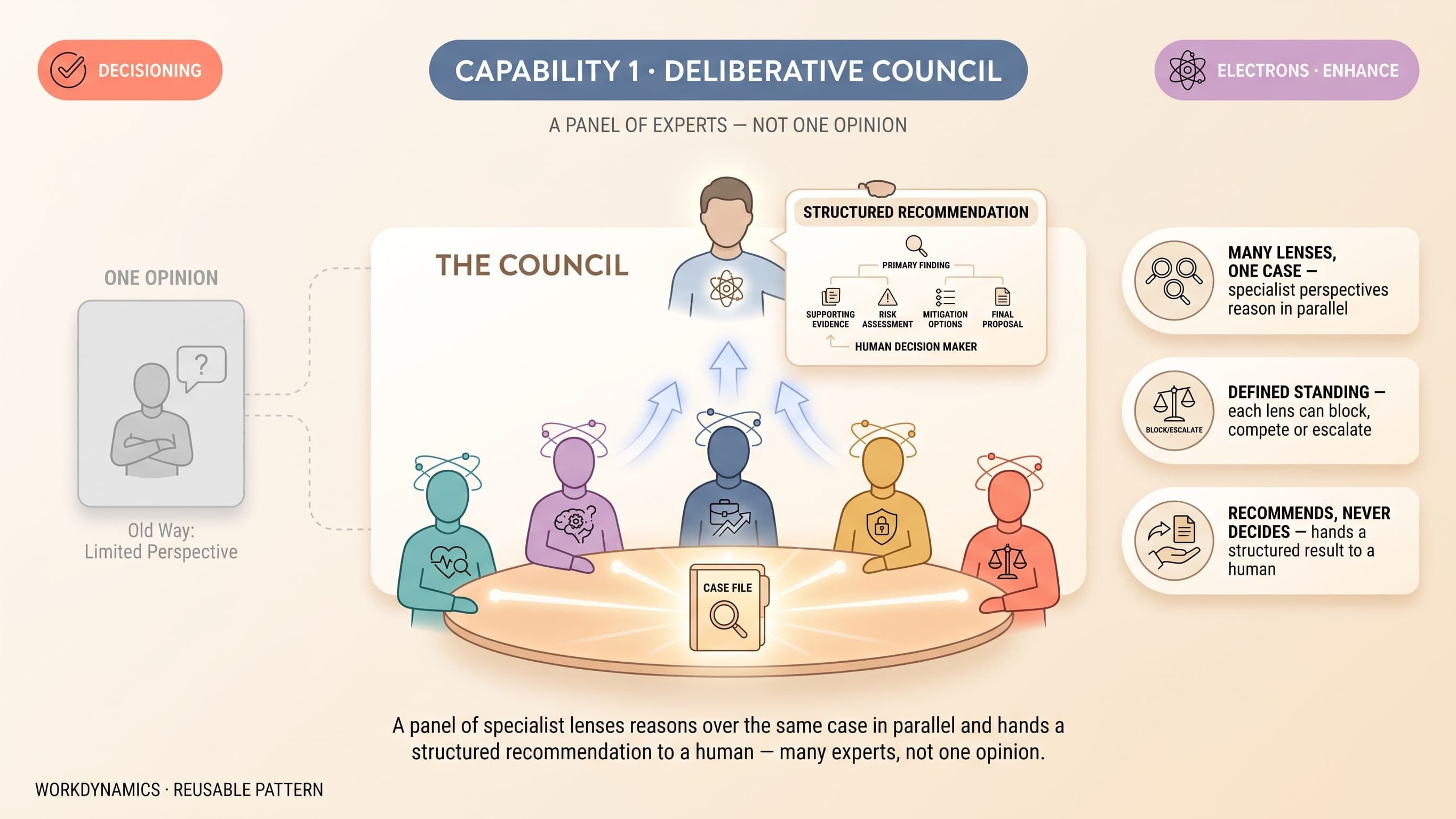
Agentic outcome: Agents carry the routine work of the function end to end — intake, triage, drafting, reporting — at the same tempo as the team. Your people hold the judgment. Cost-to-serve, throughput, and the audit trail change at the function level, because the system changed, not the habits.
The dial you set once versus the decision you make every day
There is a deeper reason the two are not interchangeable, and it is the reason most "we already have AI" complacency is misplaced.
A personal agent is a convenience you control. You give it an instruction, you set a dial for how much it's allowed to do on its own, and if it gets something wrong it is usually your problem and usually reversible. That is a perfectly sensible arrangement for one person's inbox.
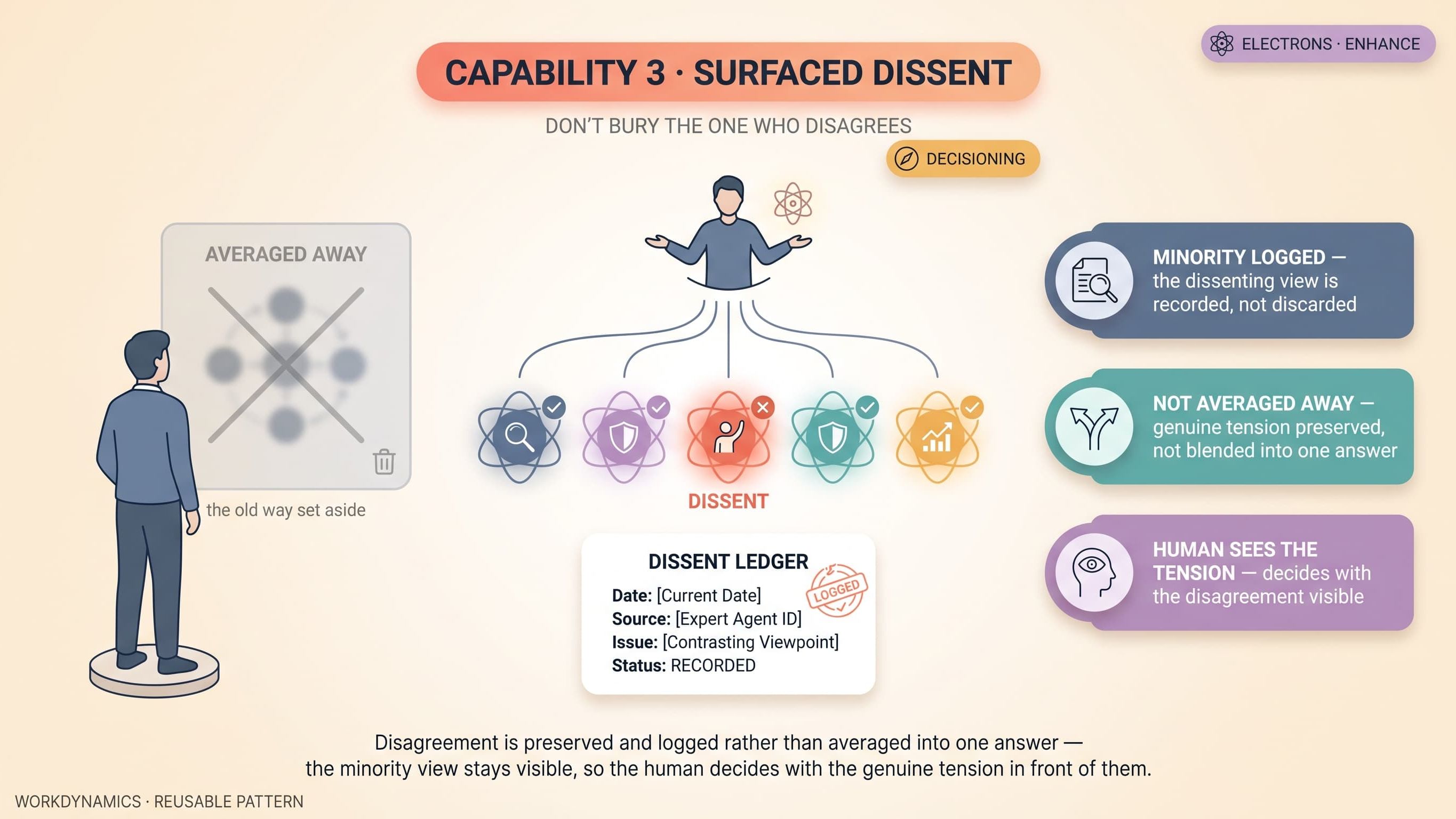
A business function is not that. It runs across thousands of cases and affects people who never set the dial — your workers, your customers, your regulator. At that scale, autonomy cannot be a convenience setting that one person chose once and forgot. It has to be a governance decision: how much an agent is allowed to do is decided case by case, against the stakes, with hard rules that can never be broken, a human holding authority at the points that matter, and every action on the record. Humans on judgment. Agents on the rest.
This is precisely why bolting a personal copilot onto a regulated function does not produce a governed function. The copilot has no concept of the function's hard floor, no audit trail built into the workflow, no escalation path when a case stops being routine. It was never meant to. It is a tool for a person, and the function is not a person.
Why personal productivity never adds up to function output
The honest read is that the two operate in different economies. Desktop AI competes on how fast a person completes a task. System-level agentic work competes on what the function produces and what it costs to produce it. You can max out the first and leave the second completely untouched — which is exactly what the 74 per cent value gap is telling us is happening at scale.
This is what Digital Labour actually is, and what separates it from a person prompting a chatbot. Digital Labour is the work performed by AI agents inside governed enterprise workflows, at the same scale and tempo as the human teams they operate alongside — not a faster human, but a different unit of work. It takes the electrons (the work whose value is in the output) and leaves the atoms (the work whose value depends on being human) with your people. That Atoms and Electrons split is the operating model, and it is what makes the result defensible rather than aspirational.
None of this is hypothetical or US-only. It runs today in Australian tenants on Microsoft Power Platform — Dataverse, Copilot Studio, Power Apps, Power Automate — with named agents handling specific workflows and humans holding the high-stakes calls. The technology you already pay for is most of the raw material. What is missing is not a better tool. It is the function-level design that turns the tool into governed work.
What a function that runs itself actually looks like
It runs itself — but never without you. Agents carry the load between the decisions; your people hold the decisions. Nothing consequential writes or sends without a human yes. The routine stops waiting in a queue for someone to notice it. The audit trail is written as the work happens, not reconstructed afterwards. And improvement stops being a project, because the system gets sharper every time it runs.
That is not a Copilot licence. It is a Functional Agentic Roadmap — a function-altitude blueprint your CFO can fund, your CIO can architect, and your board can sign off. Copilot is where your people got faster. This is where your function gets rebuilt.
If you can already feel the gap between the two — the productivity you can see and the function outcomes you still can't — that is the exposure worth reading honestly. Join the next Exposure to Command session: a working session for leaders who would rather command the shift to agentic work than be caught out by it. See where your function is exposed, and how to take command of the systems now doing the work.