What We Learned Shipping AI-Native Applications in Australian Tenants
Jun 24, 2026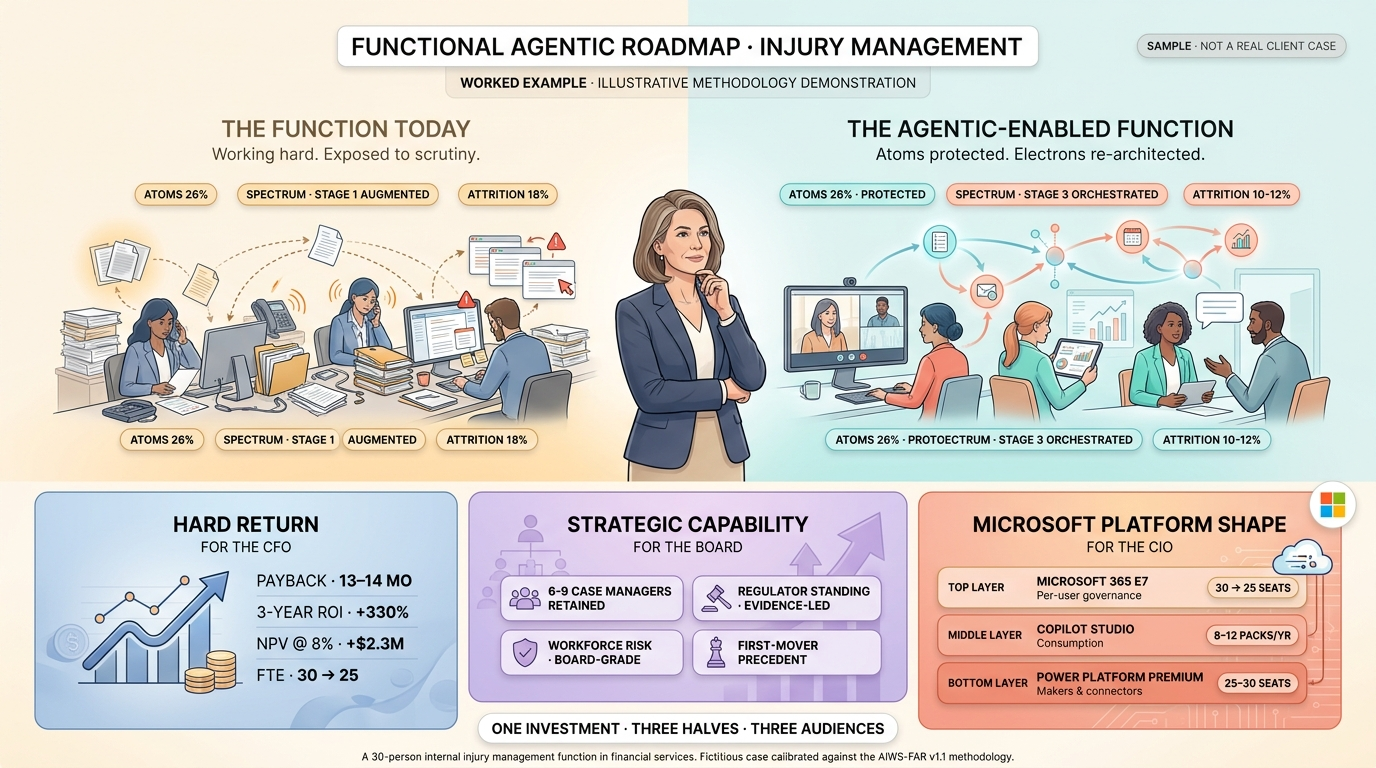
Most organisations are still arguing about whether to build AI-native applications. We have spent the last two years shipping them into live Australian Microsoft tenants — into the contact centre, into claims, into safeguarding, into injury management. What you learn in production is not what the strategy decks promise. It is sharper, more structural, and far more useful.
This is the honest read on what it actually takes to put Digital Labour into a regulated Australian environment and have it hold. Not a maturity model. Not a pilot. A set of applications that real teams depend on every shift.
The Tenant Is the Product, Not the Add-On
The first lesson is the one most vendors skip. An AI-native application does not sit beside your Microsoft tenant. It lives inside it. Injury Guard and Safe Havens are built on Dataverse, Power Apps, Power Pages and Copilot Studio because that is where the data, the identity and the governance already are. The tenant is not the deployment target. It is the product surface.
That changes the boardroom conversation. You are not buying a bolt-on SaaS tool that copies your data into someone else's cloud. You are extending a platform your CIO already governs, your security team already audits, and your finance team already pays for. Data residency, conditional access, Purview audit trails, retention policies — these are inherited, not rebuilt. For an Australian organisation carrying obligations under the Privacy Act reforms and sector standards, that inheritance is the difference between a defensible deployment and a shadow one.
What Production Teaches That Pilots Cannot
A pilot proves a model can answer a question. Production proves an application can carry a function. Those are different problems.
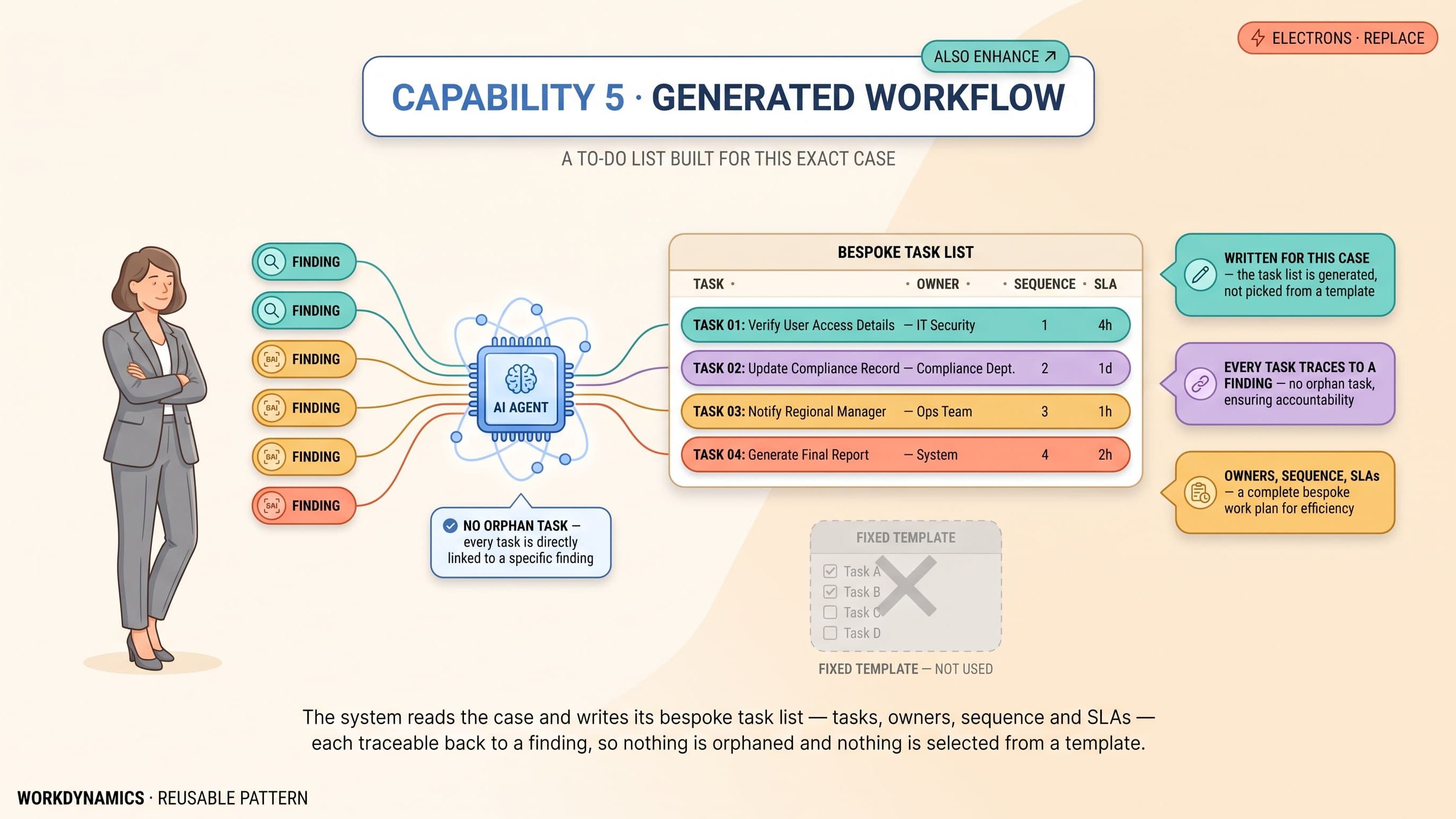
Reporting an injury is the work that a frontline supervisor does under pressure, often on a phone, often badly. Triaging that report against risk and routing it for case management is the work that decides whether an organisation meets its performance obligations. A demo handles the first. Only a deployed application — with workflow, audit, escalation and human review — handles the second.
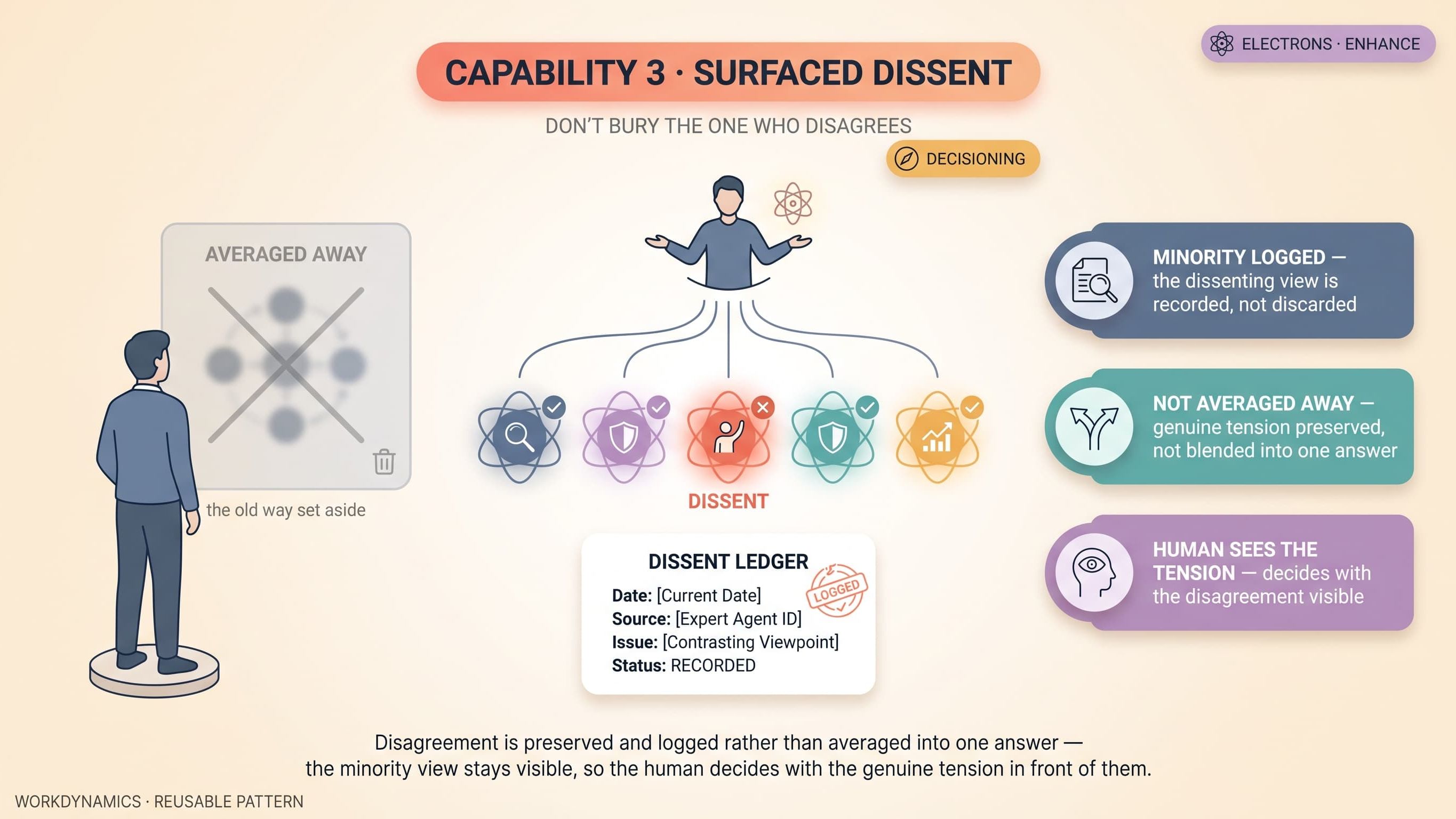
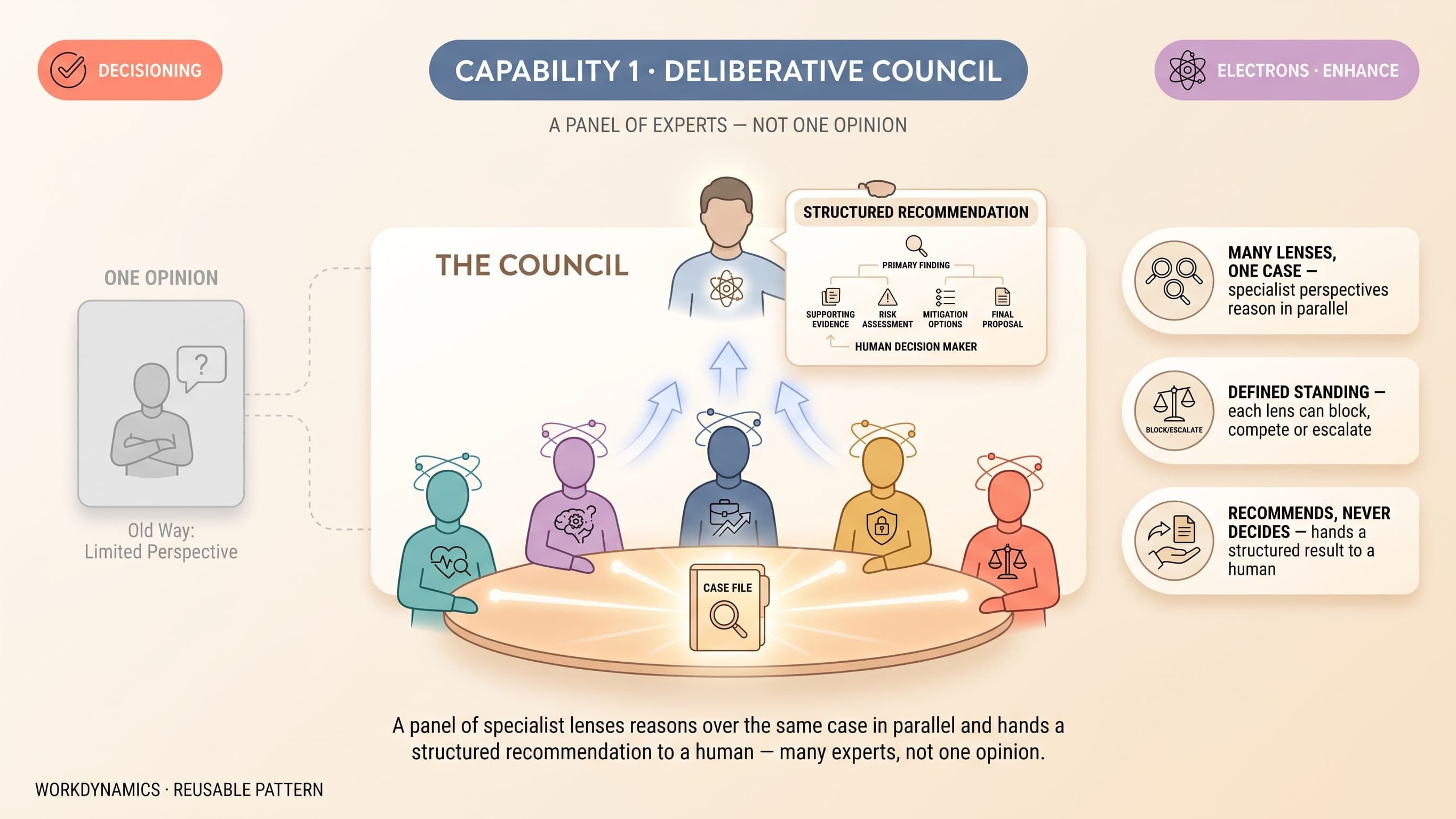
The teams that succeeded treated the model as one component inside a governed business process, never the whole answer. Deterministic logic where the rules are fixed. Adaptive intelligence where judgement is required. The discipline is knowing which is which, function by function, before a single agent goes live.
Atoms and Electrons, in Practice
The analytical move that survived contact with production is the Atoms and Electrons split. Some work is physical, bound to a place, a person, a regulated artefact — atoms. Some work is informational, able to move at the speed of the tenant — electrons. AI-native applications earn their value on the electrons: the routing, the classification, the drafting, the summarising, the cross-referencing.
When a team tried to point digital labour at the atoms — the inspection that must be walked, the conversation that must be had — it stalled. When they pointed it at the electrons around those atoms, freeing humans to do the physical and relational work, it compounded. Cost-to-serve fell. Service responsiveness rose. The pattern held across injury management and safeguarding alike.
Governance Is the Architecture, Not the Afterthought
Australia spent the last year making this explicit. The Australian Government's AI Technical Standard now sets out end-to-end requirements for the design, deployment, monitoring and decommissioning of AI systems. It targets the public sector, but it is rapidly becoming the reference any private-sector board will be measured against.
Microsoft has moved in the same direction. The Power Platform 2026 release wave adds real-time risk assessment in Copilot Studio, centralised agent visibility, and a governance plane — Agent 365 — that becomes operationally necessary once an organisation runs several custom agents. The lesson from shipping is that you architect for this on day one. Credential storage in Azure Key Vault, audit propagation through Purview, identity per agent — retrofitting these after deployment is expensive and, in a regulated function, dangerous.
Governance is not the brake on AI-native applications. It is the structure that lets a board sign off on them.
The Activation Gap Is Real — and Closable
The hardest lesson is the least technical. Most organisations do not fail at building. They fail at activating. A working application that no team has adopted, no manager owns, and no process depends on is not digital labour. It is a stranded asset.
This is why we wrapped the engineering in a structured activation program. LEEP exists because shipping the application is only half the work; landing it inside a function — with the training, the ownership and the operating rhythm that make it stick — is the other half. The applications that became real digital labour did so because someone closed that gap deliberately, function by function, not because the technology was newer.
Where an application sits on the AI Work Spectrum tells you what activation will demand. The further toward autonomous the work, the heavier the governance and change effort. Pretending otherwise is how good applications die in staging.
What This Means for Your Next Build
Three lessons, stated plainly. Build inside the tenant, because the tenant is where your governance, identity and data sovereignty already live. Split the work into atoms and electrons before you build, because that is what makes the roadmap defensible. And fund the activation, not just the engineering, because an application no function depends on is not labour at all.
Your CFO can fund this. Your CIO can architect it. Your board can sign off on it — but only if the governance is in the architecture from the first sprint.
If you are weighing your first AI-native application, start by mapping one function honestly: what is exposed, what is atoms, what is electrons, and what credible response looks like. That is the work the LEEP activation program is built to run. Book the function-altitude conversation before you write a line of code — it is the cheapest insurance you will buy on the whole build.