The Australian Government AI Technical Standard — What Private Sector Should Do Now
Jun 24, 2026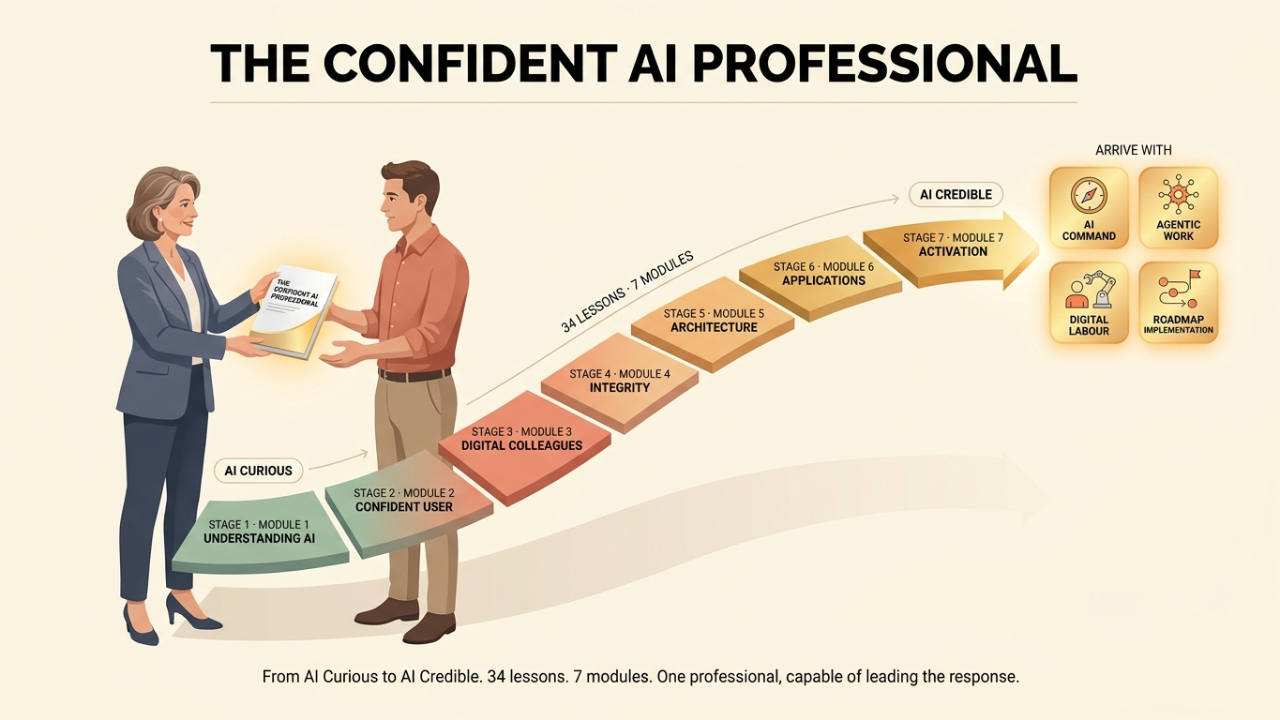
The Australian Government has now told you what good looks like. It wrote the standard for itself, but the most useful thing the private sector can do in 2026 is read it as if it were written for you.
In July 2025 the Digital Transformation Agency released the Australian Government AI technical standard — a consistent set of requirements for the design, development, deployment, monitoring and decommissioning of AI systems across the public sector. Three months later, the National Artificial Intelligence Centre replaced the 2024 Voluntary AI Safety Standard with Guidance for AI Adoption, condensing ten guardrails into six essential practices. Then, in December 2025, the National AI Plan confirmed the direction of travel: no standalone AI Act, no near-term mandatory guardrails, and reliance on existing law, sector regulators and voluntary guidance instead.
Read those three moves together and the conclusion is uncomfortable for anyone waiting for a regulator to tell them what to do. Nobody is coming to mandate it. The benchmark already exists, it is public, and it is now the clearest articulation in Australia of what a credible response looks like.
The standard already applies to more private-sector organisations than they think
The technical standard is framed as guidance for government's use of AI. But its scope is broader than the cover page suggests. It applies to in-house systems, to systems procured from the private sector, and to pre-trained models and managed services. If you sell software, build applications, or deliver a managed service to a Commonwealth agency, the standard is already a procurement reality for you — not a future one.
That is the first honest read. For a large slice of the Australian mid-market and enterprise, the question is not whether the standard is relevant but whether your function can evidence that it already meets it. Most cannot. Not because the work is hard, but because AI has been adopted at the individual-user level — a licence here, a chatbot there — rather than at the level where accountability actually sits.
Whole-of-organisation compliance is the wrong altitude
The temptation is to treat the standard as a corporate policy exercise: a board paper, an AI governance committee, a principles document on the intranet. That produces the appearance of a response without the substance of one.
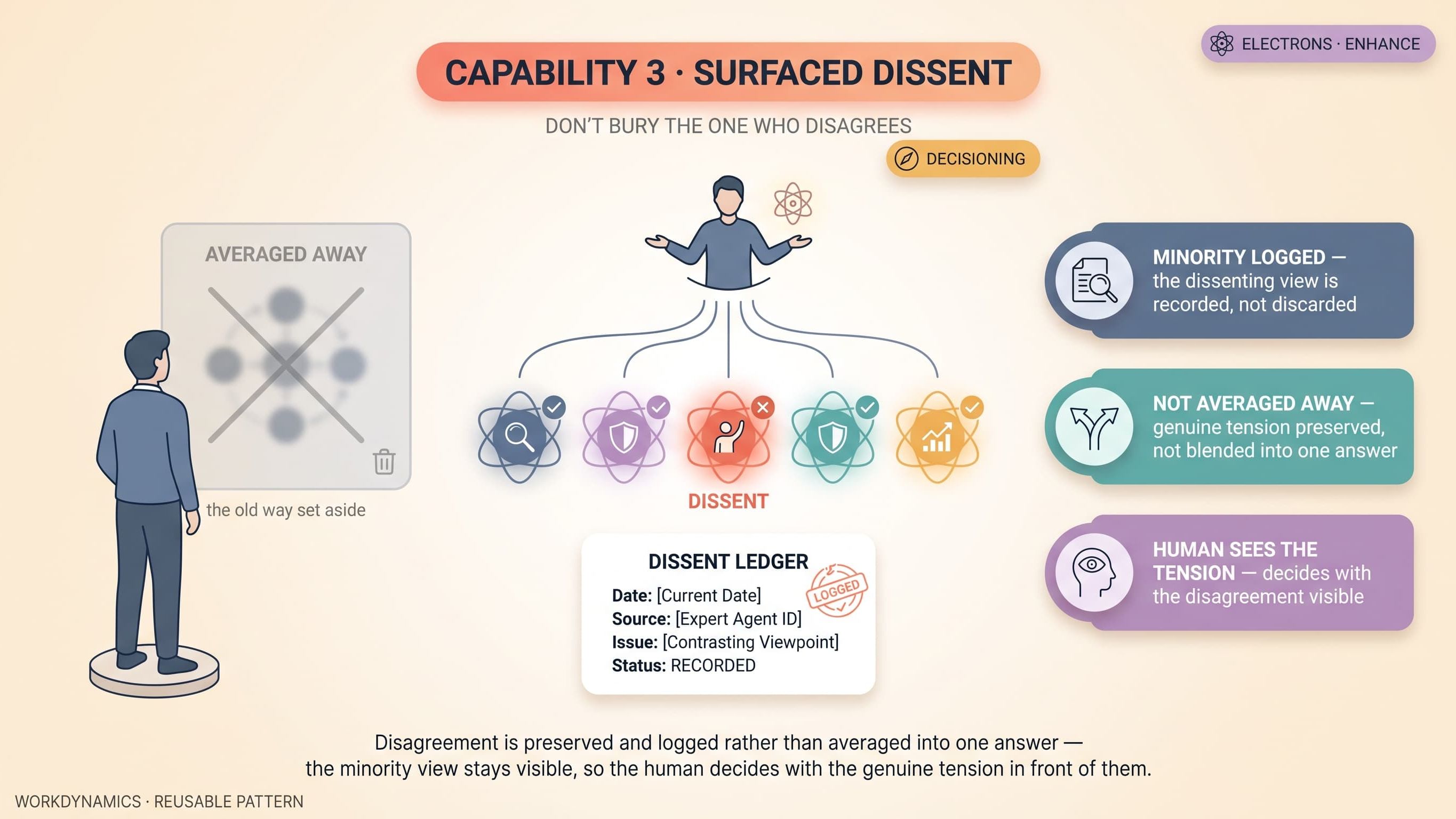
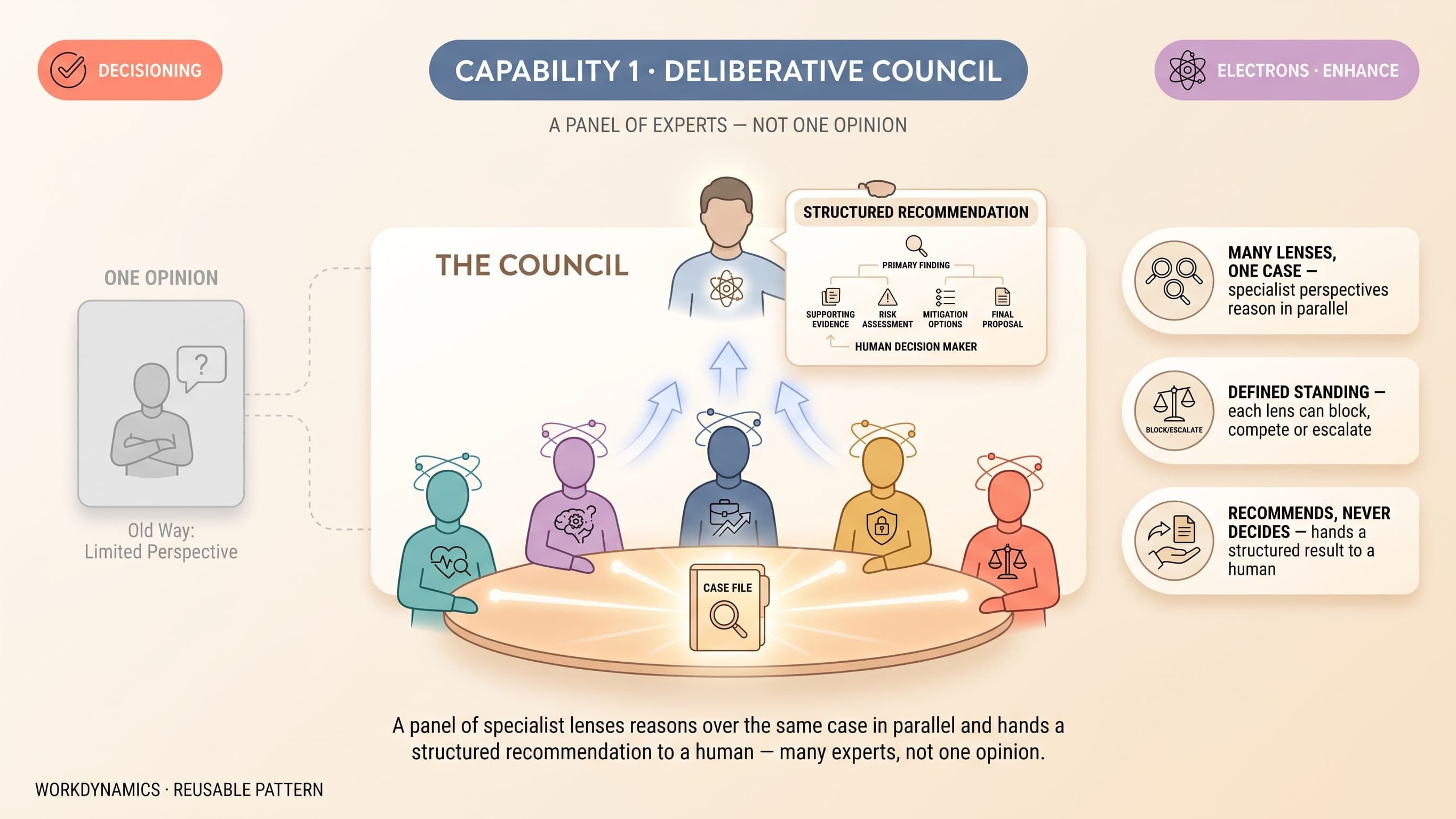
The six practices in the Guidance for AI Adoption — governance and accountability, impact assessment, risk management, transparency, testing and monitoring, and human oversight — only become real at the level of a specific function doing specific work. Human oversight of what? Testing and monitoring of which system, against which threshold, owned by whom? A whole-of-organisation answer cannot say. A function-altitude answer can: the claims team, the contact centre, the safeguarding function, the WHS unit.
This is where the Atoms and Electrons distinction does the analytical work. The standard asks you to govern AI systems. To do that you first have to separate the work that is physical and judgement-bound from the work that is informational and rules-bound — the electrons. You cannot apply impact assessment or human oversight to a function you have not first decomposed. The standard assumes that decomposition. Most organisations have never done it.
Two things the private sector should do now
The first is to build the literacy the standard takes for granted. Every one of the six practices presumes that the people accountable for a function can reason about AI competently — what a model can be relied on to do, where it fails, what oversight actually means in their context. That capability is not evenly distributed, and it is not an IT competency. It belongs to function heads, safety leaders, people leaders and operations leaders. This is the discipline that The Confident AI Professional is built to install: not awareness training, but the working fluency a leader needs to sign off on a governed AI system and defend the decision.
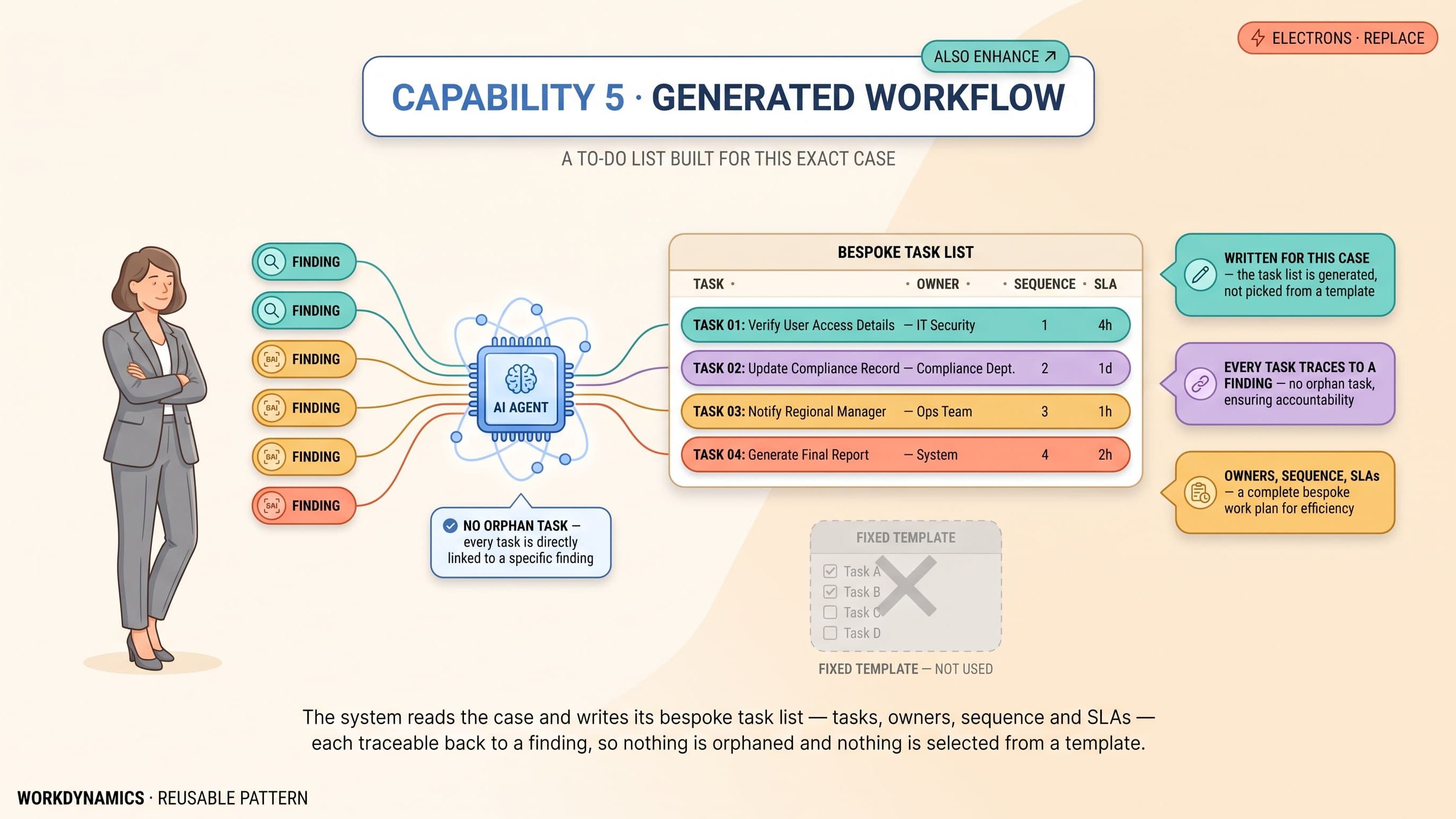
The second is to deploy AI in a form the standard can actually govern. Digital Labour — AI doing defined, bounded work inside a function, with clear ownership and clear thresholds — is governable by design. Shadow AI is not. A scatter of personal tools cannot evidence impact assessment, testing or human oversight, because nobody owns the system as a system. LEEP exists to close exactly this gap: to take a function from strategy to deployed, governed Digital Labour, with the accountability the standard requires built in from the first day rather than retrofitted after an incident. The artefact that connects the two — what to deploy, where, with what controls — is the Functional Agentic Roadmap.
The standard rewards the organisations that were already operating
Here is the part worth sitting with. The Australian guidance was deliberately aligned with international frameworks — ISO/IEC 42001 and the NIST AI Risk Management Framework — so that an organisation meeting the local standard also meets the global one. That alignment is a gift to anyone with international clients or ambitions. It is also a trap for anyone treating the standard as a box to tick, because a tick does not survive contact with a procurement panel, an AFCA-adjacent complaint, or a board member asking how a decision was made.
The organisations that will clear the standard comfortably are the ones already operating their AI as governed Digital Labour at function altitude. The ones that will struggle are the ones with a policy and no operating reality underneath it. Mandatory guardrails were shelved precisely because the government judged that the credible players do not need to be compelled. The standard is the line. Whether you are above it is a structural question, not a paperwork one.
The next concrete action: pick one function — claims, contact centre, safeguarding, WHS — and run an honest read against the six essential practices. Where can you evidence governance, oversight and monitoring today, and where is there a policy with nothing operating beneath it? Start that diagnostic with LEEP before the next procurement cycle makes the question someone else's to ask.