The 90-Day AI Activation Plan — From Blueprint to Deployed Digital Labour
Jun 24, 2026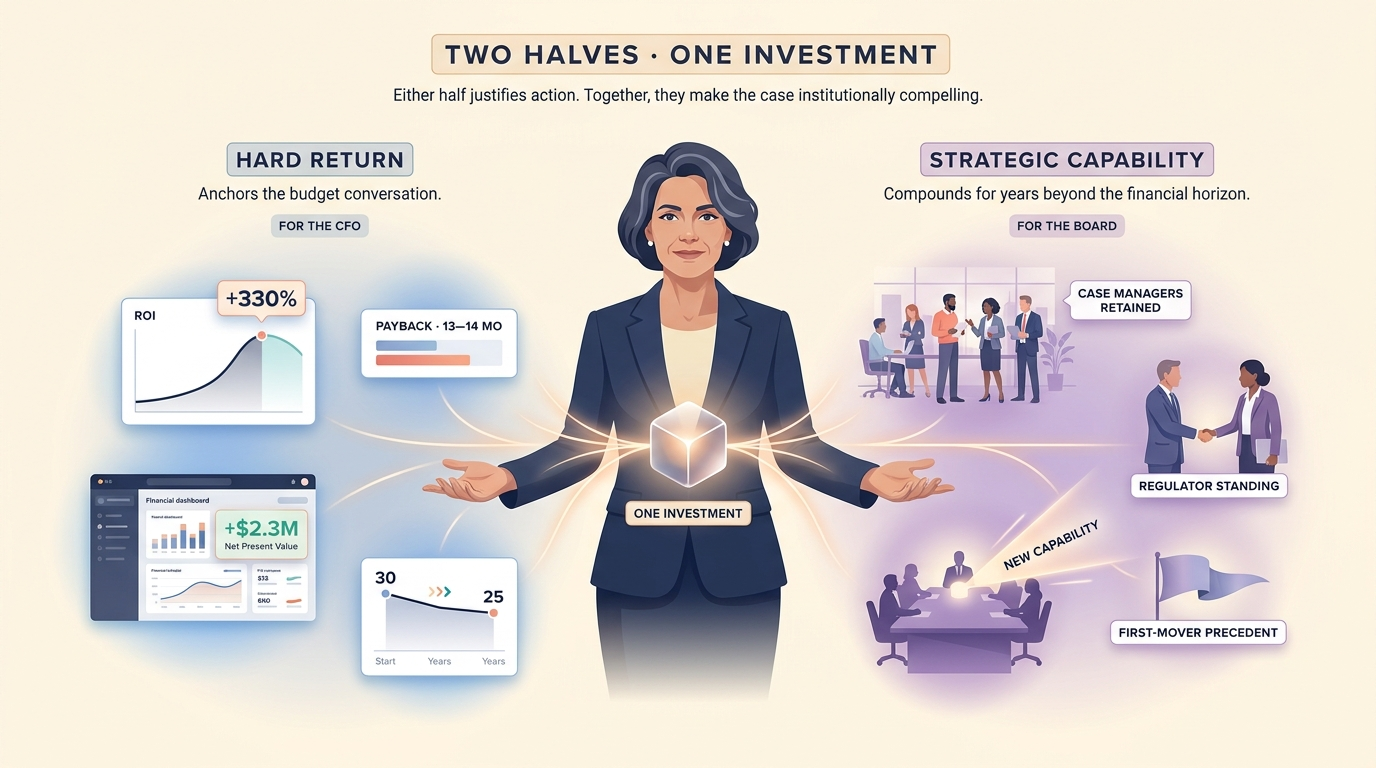
Most organisations now have an AI strategy. Far fewer have anything deployed. The artefact sits in a drawer — approved, admired, and inert — while the work it described goes on being done the old way. The gap between a signed-off plan and a function actually running on agents is not a technology gap. It is an activation gap, and it has a timeline.
Ninety days is enough to close it for one function. Not the whole organisation. Not a generalised "AI uplift". One function, moved deliberately from blueprint to deployed Digital Labour, with the return measured and the next workflows sequenced. This is the work the LEEP activation program exists to do, and it starts where the Functional Agentic Roadmap leaves off.
Pilot purgatory is an activation gap, not a technology gap
The numbers are now embarrassingly consistent. McKinsey's latest read finds that while almost two-thirds of enterprises have experimented with agents, fewer than 10% have scaled them to deliver tangible value. Gartner expects over 40% of agentic AI projects to be cancelled by 2027. The tooling is not the constraint. Microsoft 365 Copilot, Copilot Studio, Power Automate and Dataverse are all production-grade and sitting inside tenants that organisations already pay for.
What's missing is a structured path from "we could" to "we did". Pilots stall because they were never scoped to a function's actual work, never given a governed production environment, and never measured against a return a CFO would defend. The result is a permanent holding pattern — endless experiments that demonstrate capability and never become operating reality.
The 90 days move one function from blueprint to deployed Digital Labour
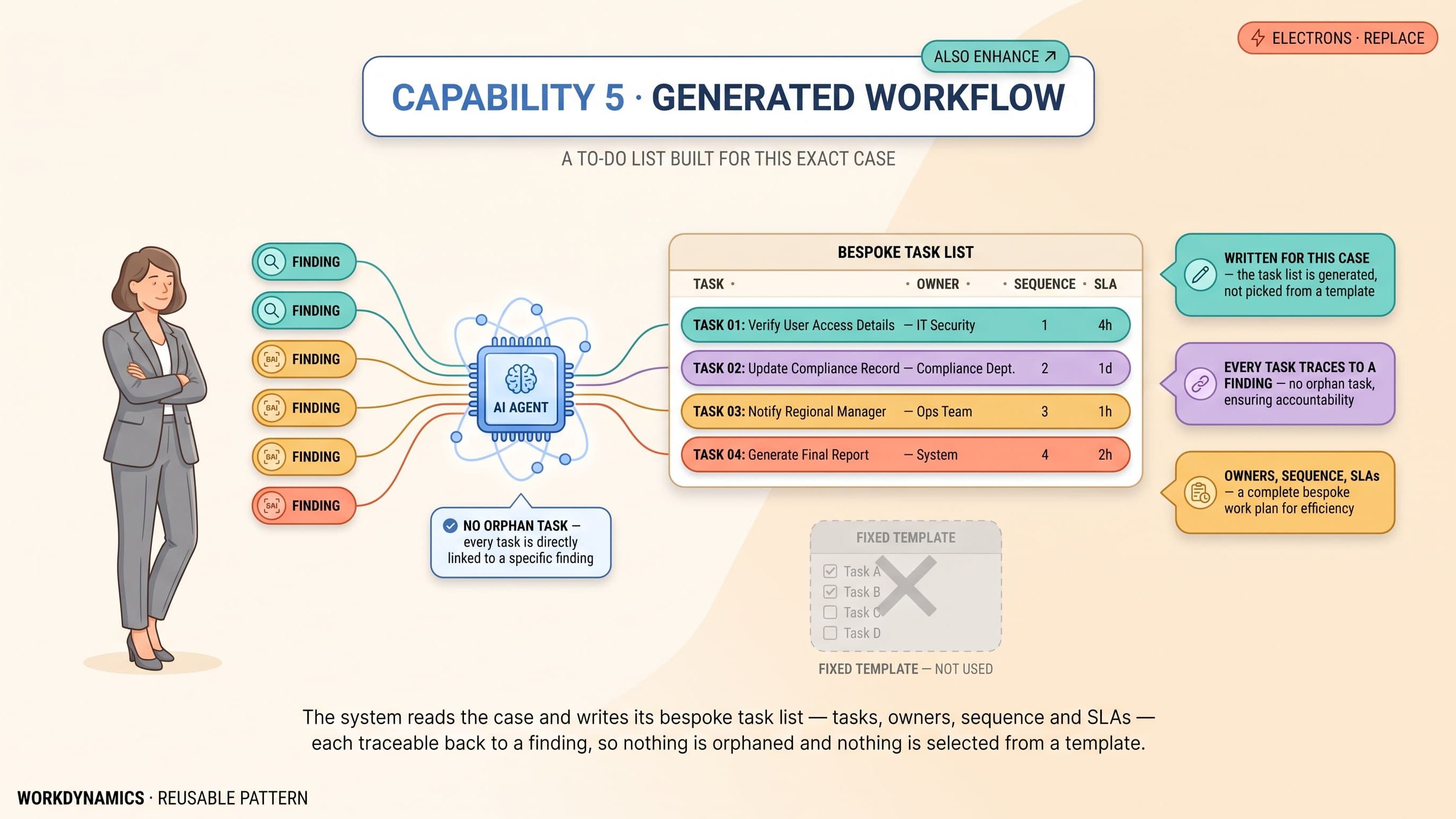
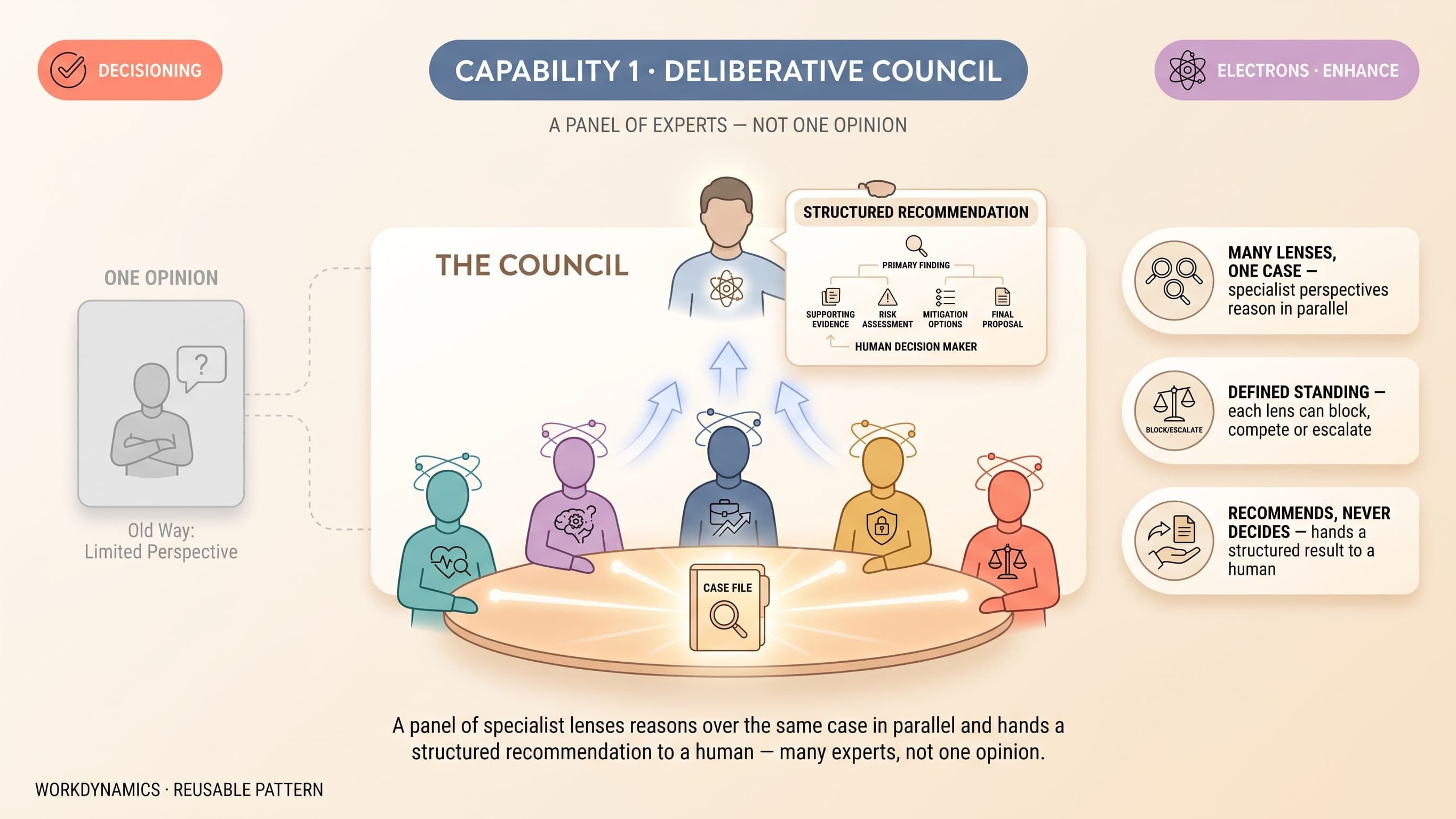
Activation is not a strategy refresh. It is a build, run and prove sequence against a blueprint that already exists. The starting artefact is a Functional Agentic Roadmap: nine analytical components, the atoms-and-electrons reading of the function's work, a sequenced workflow priority list, an investment case the CFO has signed, and a Microsoft platform shape the CIO has scoped. With that in hand, the 90 days have somewhere defensible to point.
The reading underneath it is the one that makes the timeline realistic. Atoms are the work whose value depends on being human — the high-stakes conversation, the considered judgment, the relationship. Electrons are the work where the value is in the output, not the doer — triage, information assembly, routing, reporting. Activation ships the electrons into Digital Labour and leaves the atoms with the people. You do not need to resolve the hard human questions to start. You need to deploy the work that was never human-dependent in the first place.
Days 0–30: stand up the governed foundation
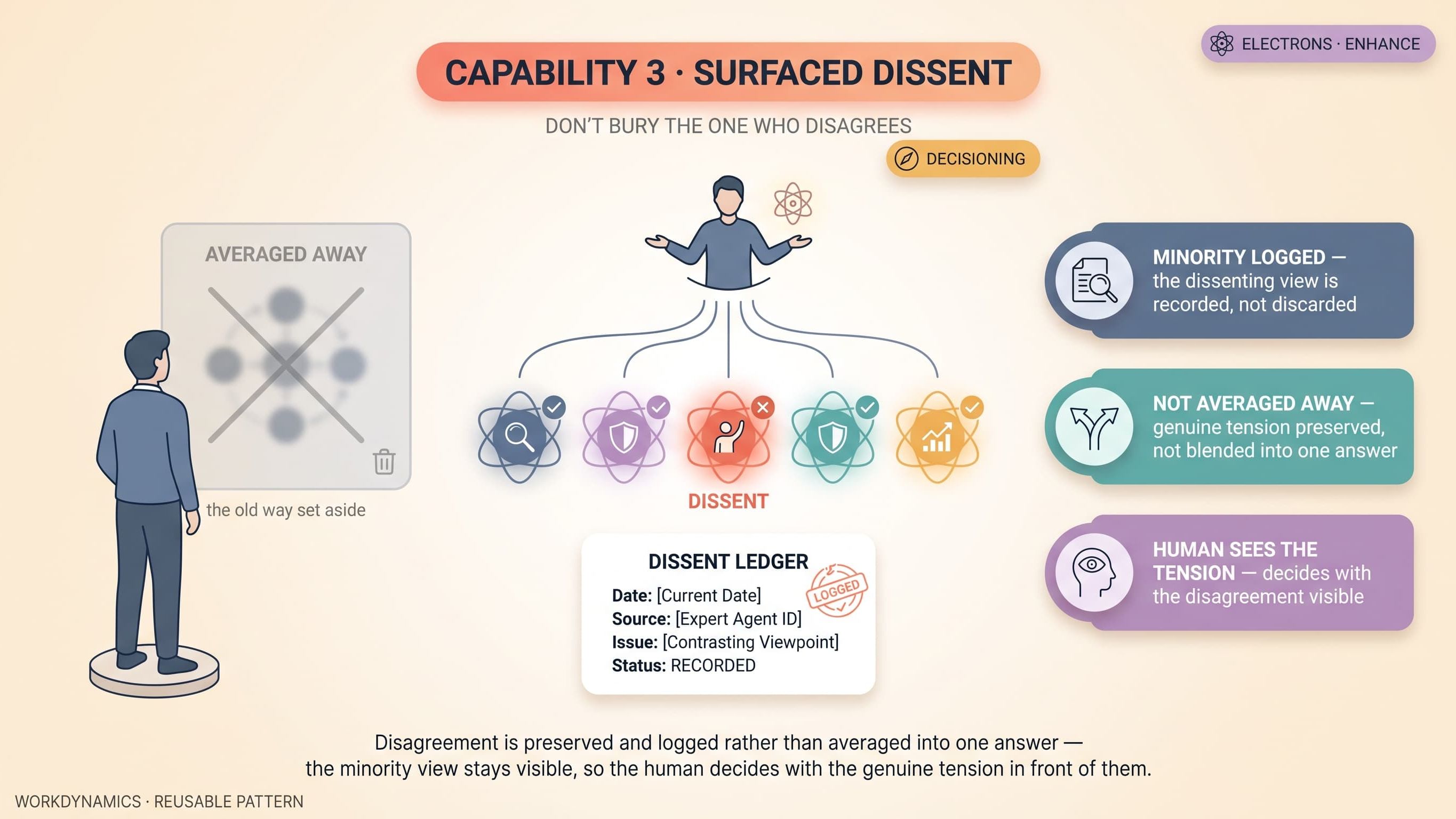
The first month builds the environment, not the demo. A governed Copilot Studio and Power Platform footprint inside the production tenant. Dataverse connections to the systems the function already runs on. Access controls, audit logging and a human-in-the-loop checkpoint on every agent that touches a customer or a record. This is the discipline that separates deployed Digital Labour from shadow AI — the same capability, governed rather than improvised.
It also aligns with where Australian regulation has landed. The December 2025 National AI Plan confirmed Australia will rely on existing laws, sector regulators and voluntary guidance rather than a standalone AI Act, with the new AI Safety Institute providing technical oversight. The governed foundation is what lets a function show a regulator evidence rather than intent.
Days 30–60: ship the first electrons into production
The second month deploys. One or two high-volume, low-judgment workflows from the top of the priority list go live — the routine contact, the triage step, the reporting that consumed hours and required no discretion. Real work, real records, real users. Not a sandbox.
This is where the APS Copilot trial is instructive. Staff who received three or more training sessions reported 75% confidence using the tool, against far lower confidence among those left to self-serve. Deployment is half technical and half human. The function's people need to understand what the agents now do, what stays theirs, and why. Capability uplift through The Confident AI Professional runs alongside the build, not after it.
Days 60–90: prove the return and sequence what's next
The final month measures. Hours returned, cost-to-serve movement, service responsiveness, error rates against the human baseline. The investment case stops being a projection and becomes a result the function head can take back to the CFO. In the worked Functional Agentic Roadmap examples — a 60-person contact centre, a 30-person injury management team — payback lands inside 12 to 14 months and three-year returns sit between +330% and +377%. Ninety days is where the first instalment of that return becomes observable.
Then the sequence extends. The next workflows on the priority list are scoped, the platform footprint proven in months one to three carries them, and the function moves from a single deployed capability to a rolling activation. One function activated properly becomes the template the next function is measured against.
Function altitude is what makes 90 days realistic
A whole-of-organisation AI programme cannot be activated in a quarter; the surface area is too large and the ownership too diffuse. An individual-user rollout activates nothing structural; it scatters licences and hopes for emergent value. The function is the only altitude where 90 days is both ambitious and achievable — one accountable leader, one coherent body of work, one investment envelope, one defensible blueprint to build against.
That is the whole argument for activating at function altitude. Your CFO can fund it because the return is bounded and measured. Your CIO can architect it because the platform shape is scoped to real workflows. Your board can sign it off because it is one function, deployed and proven, not an open-ended transformation budget.
The next concrete move
If your organisation has a strategy deck but nothing deployed, the gap is activation — and it is closeable in a quarter. Book a 30-minute scoping conversation to map a 90-day activation plan for one function: the workflows that go first, the governed Microsoft footprint they run on, and the return you'll be able to show your CFO at day 90.