Shadow AI Is a CIO Problem — Here's the Governed Alternative
Jun 11, 2026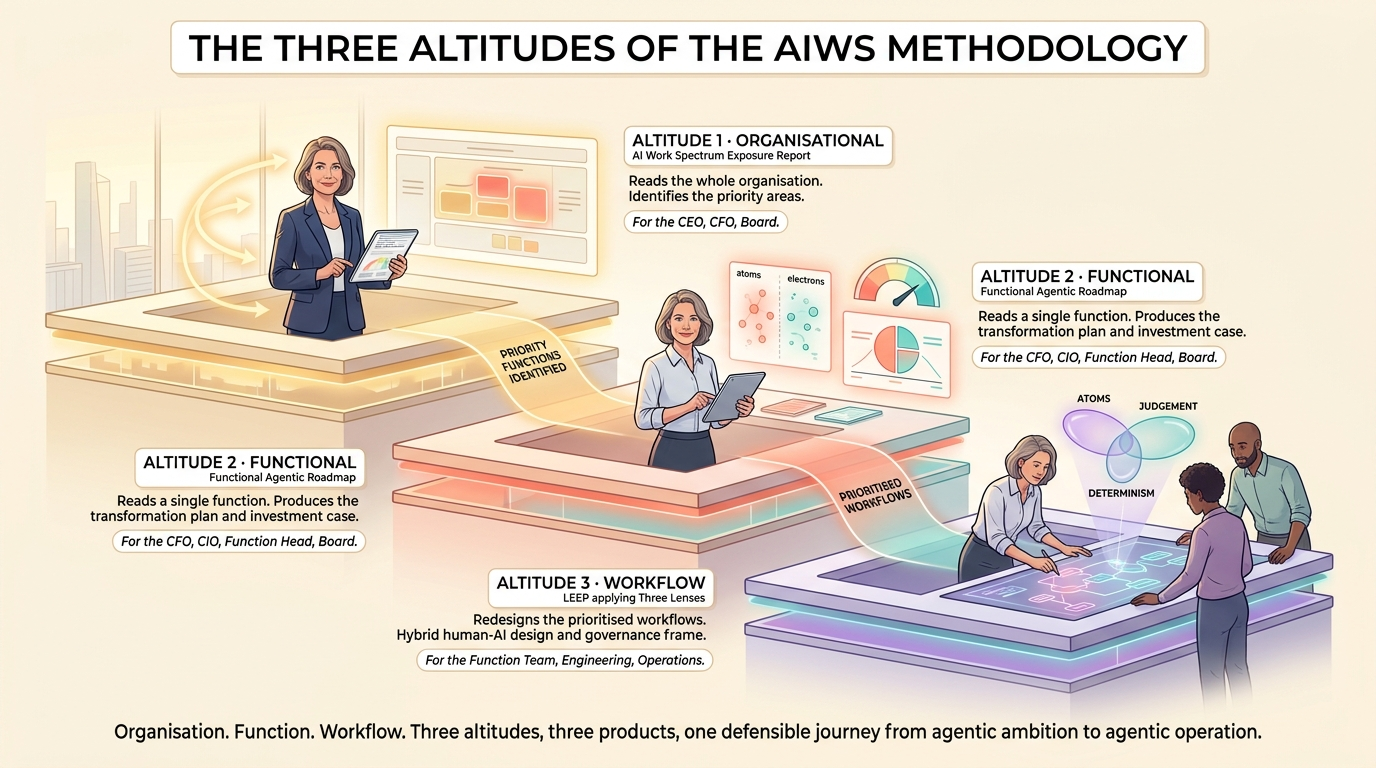
Half your organisation is already using AI. Most of your CIO's controls can't see it.
That isn't a prediction. In Australia, around 60% of workers admit to using AI tools their employer hasn't sanctioned, and 87% of Australian SMBs report employees using unapproved AI tools. The work is already being done with AI. The only open question is whether anyone with accountability can see it, govern it, or defend it.
Shadow AI gets framed as a security incident waiting to happen. It is. But treating it as a firewall problem misreads what is actually going on. Shadow AI is the signal that a function found value faster than the organisation could govern it. The pasted customer complaint, the HR file dropped into a consumer chatbot, the claims summary generated by an unmanaged tool — each one is a worker doing the routine part of their job the only way available to them.
The CIO owns the consequence. They do not yet own the alternative.
Shadow AI is a governance failure, not a workforce failure
The instinct is to blame the people. The evidence does not support it. KPMG found around half of employees use AI at work without knowing whether it is allowed, and more than four in ten knowingly use it improperly — not because they are reckless, but because no governed path exists. Meanwhile most organisations still have no clear AI governance policy in place.
So the behaviour is rational. Where the organisation has not defined what good looks like, the workforce defines it instead — tool by tool, prompt by prompt, with confidential data as the input.
This is where the cost stops being theoretical. IBM's research puts the shadow-AI premium on a data breach at roughly USD $670,000 — a 16% surcharge on an already expensive incident. And the regulatory floor is rising. Privacy Act reforms and the Australian Government's Voluntary AI Safety Standard now set an expectation of traceable, accountable AI use. Unsanctioned tools fail that test by definition.
Banning it does not work — and is not the alternative anyway
The reflexive response is prohibition. It fails for a structural reason: it removes the tool without removing the work. The routine work still has to move. Block the unmanaged path and the work routes around the block, further into the shadows.
Not a ban. Not a policy memo. Not an awareness campaign. The governed alternative is a function that has already decided which work belongs to Digital Labour and which work stays human — and has stood up the platform to run it under control.
That decision is the whole game. And it is made with Atoms and Electrons.
Atoms and electrons — the move that ends the shadow
Atoms are the work whose value depends on being human: the vulnerable-customer conversation, the considered judgment, the relationship that holds the account. Electrons are the work where the value is in the output, not the doer: triage, information assembly, routine reporting, the handoffs between systems.
Shadow AI lives almost entirely in the electrons. People reach for an unsanctioned chatbot to do the work that does not need them to be valuable — and they are right that it should not. The error is not the instinct. It is that the electrons were never given a governed home.
Read a function through atoms and electrons and the shadow problem reframes itself. The electrons become a defined scope of work to move onto managed Digital Labour. The atoms become the protected human core no agent touches. The result is not a prohibition list. It is a function-altitude map of exactly what gets governed and where the line sits.
The governed platform already exists
The CIO's strongest argument is that the controls have arrived. Microsoft now runs Agent 365 as a central control plane for AI agents — agent inventory, permissions, behaviour and activity governed through the same admin and security workflows already in place. Copilot Studio governs the agents themselves, Dataverse gives them governed business context, and Entra Conditional Access applies identity policy to agents the way it does to people.
The capability gap that justified shadow AI is closing. An employee no longer has to leave the tenant to get the routine work done. The governed path can be the fastest path — which is the only condition under which governance actually holds.
From exposure to a blueprint your board can sign
Shadow AI is the symptom. The cause is a function operating without a defensible plan for its own AI. Close that and the symptom resolves on its own.
A Functional Agentic Roadmap is how a function makes that plan concrete: the atoms-and-electrons read, the workflows to move first, the Microsoft platform shape, and the investment case — in one artefact. Your CFO can fund it. Your CIO can architect it. Your board can sign it off. And LEEP is how the blueprint becomes deployed, governed Digital Labour rather than another document — the activation path from plan to production.
Shadow AI will not be policed out of existence. It will be displaced by a governed alternative that does the same work, faster, where the CIO can see it.
The next concrete move is to scope a Functional Agentic Roadmap for the function where shadow AI is most exposed — contact centre, claims, HR or safety — and turn the unmanaged behaviour into a defensible plan. Book a 30-minute scoping conversation.