How to Build an AI Business Case Your CFO Will Fund
Jun 08, 2026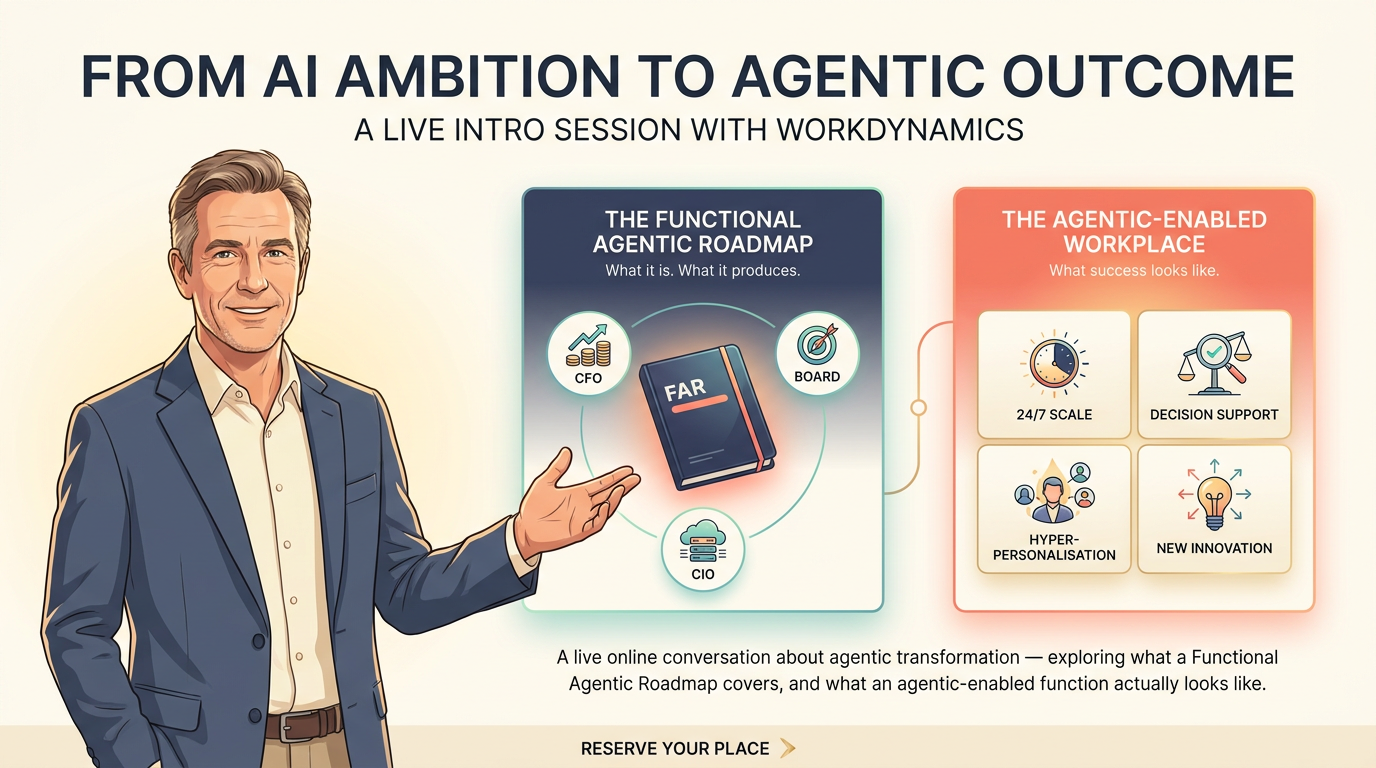
How to Build an AI Business Case Your CFO Will Fund
The problem isn't CFO scepticism. It's that most AI business cases give the CFO nothing to fund.
Australian CFOs are not anti-AI. A survey of 600 finance chiefs across eight countries, including Australia, ranked increasing AI investment as their second-highest strategic priority. The appetite is there. The funded cases aren't.
Deloitte's 2026 State of AI in the Enterprise shows why. Most organisations report satisfactory ROI on a typical AI use case arriving in two to four years — against the seven-to-twelve-month payback CFOs expect from technology investment. Only 65% of Australian organisations plan to increase AI investment next financial year, trailing global peers. The same research names the three blockers: governance anxiety, fragmented ownership, and ROI ambiguity.
None of those are technology problems. They are business-case problems. And they share one root cause — the case was built at the wrong altitude.
Why enterprise-altitude cases die at the CFO's desk
The standard AI business case is written for the whole organisation. Productivity uplift percentages applied to total payroll. Licence costs multiplied across every employee. A benefits curve borrowed from a vendor deck.
A CFO can't fund that, because nothing in it is attributable. No single budget line moves. No cost centre owns the return. When the benefits are spread across everyone, they are owned by no one — and a return owned by no one never survives the first budget review.
The unit a CFO can actually fund is the function. A function — HR, claims, contact centre, customer service, safety — has its own cost structure, its own headcount line, its own service obligations, and its own regulator. It is the smallest unit where AI produces measurable change to cost-to-serve and service responsiveness, and therefore the smallest unit where a return can be attributed, tracked, and defended.
Function altitude isn't a smaller version of the enterprise case. It's a different discipline.
Read the work before you price the case
A fundable case starts with an honest read of the function's work — not with the technology. Inside our method, that read is the Atoms and Electrons split. Every workflow in the function is divided into two:
Atoms — work whose value depends on being human. High-stakes conversations. Judgment that can't be delegated. Trust and relationship building.
Electrons — work where the value is in the output, not the doer. Information assembly. Triage and routing. Automated reporting. Handoffs between systems.
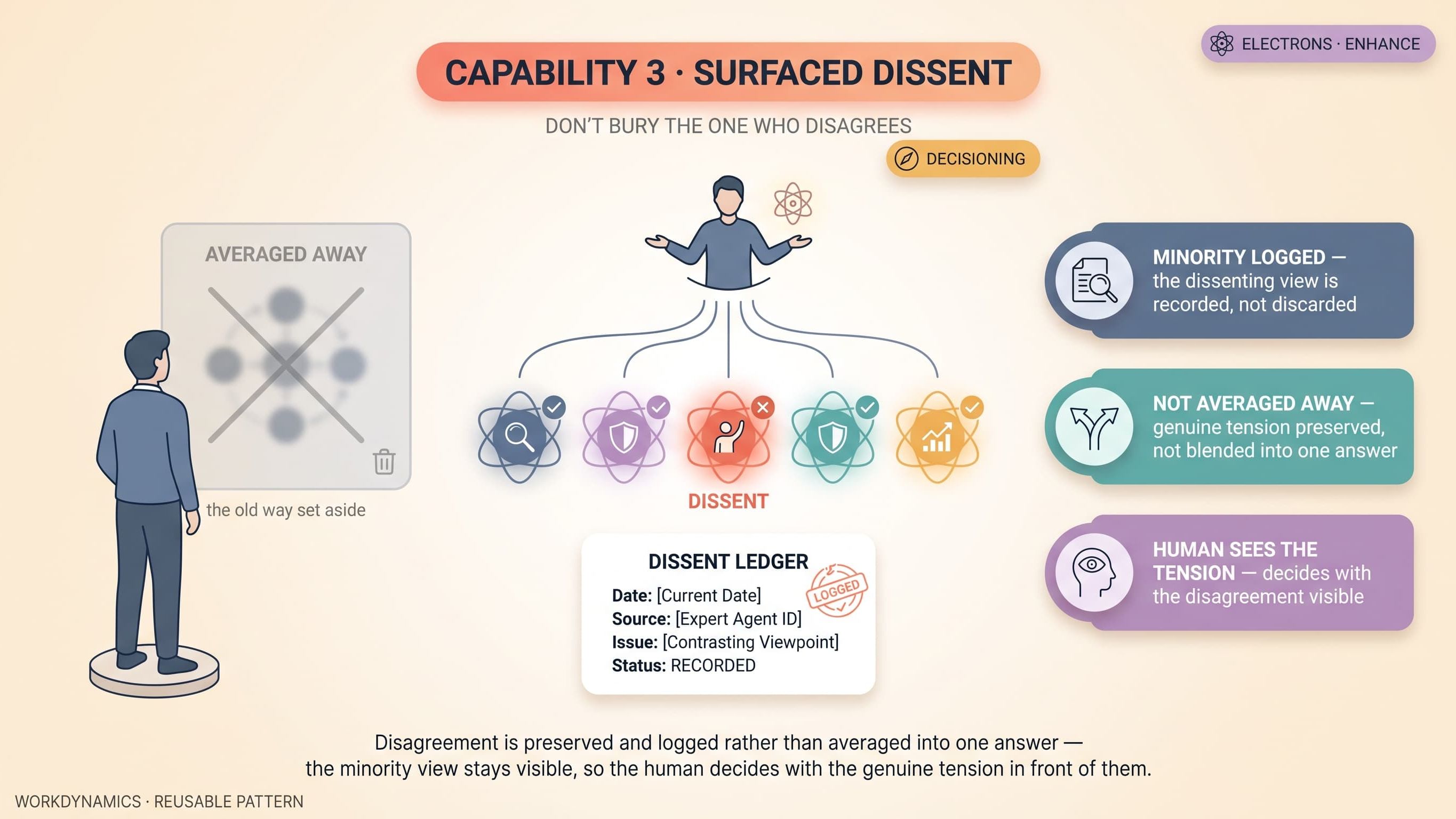
The split does the financial heavy lifting. The electrons define the addressable cost base — the work agents can take end-to-end as Digital Labour. The atoms define what the case protects: the experienced people whose judgment carries the function's commercial and regulatory standing. A case that prices the electrons and protects the atoms is structurally defensible. A case that promises generic uplift across both is fiction.
The three things a CFO actually reads
Strip away the slideware and a CFO funds against three elements.
The hard return. Addressable cost identified workflow by workflow, an investment envelope covering platform and build, and a payback line. At function altitude these numbers are real. In our contact centre worked example — a 60-person team in consumer financial services — the read came in at 12% atoms, with payback in 12–13 months and a three-year return around +377%. In a 30-person injury management function, 26% atoms, payback in 13–14 months, three-year return around +330%. Different functions, same discipline — and both inside the payback window CFOs already apply to technology investment.
The strategic capability case. What the function can do after that it couldn't do before: service responsiveness that doesn't degrade with volume, an audit trail that strengthens regulatory standing, retention of the experienced people who would otherwise leave. This is the half the board reads.
The platform shape. The case must name its infrastructure — for us, the Microsoft stack: Copilot Studio, Dataverse, Power Automate, and the Microsoft 365 E7 commitment shape — so the CIO can architect against it and the Microsoft account team can price it. ROI ambiguity dies when the cost side is as specific as the benefit side.
Hard return for the CFO. Capability for the board. Platform for the CIO. One case, three readers.
Solve fragmented ownership in the structure of the case itself
Deloitte's "fragmented ownership" finding describes most AI initiatives precisely: the function head owns the problem, the CIO owns the platform, the CFO owns the capital, and nobody owns the case. Each produces their own document, and the three never reconcile.
The fix is structural — one artefact every signatory reads from the same page. That is what a Functional Agentic Roadmap is built to be: nine analytical components producing a single function-altitude blueprint. Your CFO can fund it. Your CIO can architect it. Your board can sign off on it.
Not a strategy deck. Not a maturity model. Not a pilot seeking forgiveness. A blueprint with a payback line.
Where to start
Pick the function where the case is strongest — high volume, heavy electrons, a cost-to-serve line the CFO already watches. Run the atoms-and-electrons read. Price the electrons, protect the atoms, name the platform. Then put one document in front of all three readers.
If you want to see what the finished artefact looks like before you commission one, request the sample Functional Agentic Roadmap report — a worked example with the investment case, payback profile, and platform shape included.
One function. One artefact. A case your CFO can actually fund.