AI Training for Safety and Compliance Leaders — What to Actually Teach
Jun 24, 2026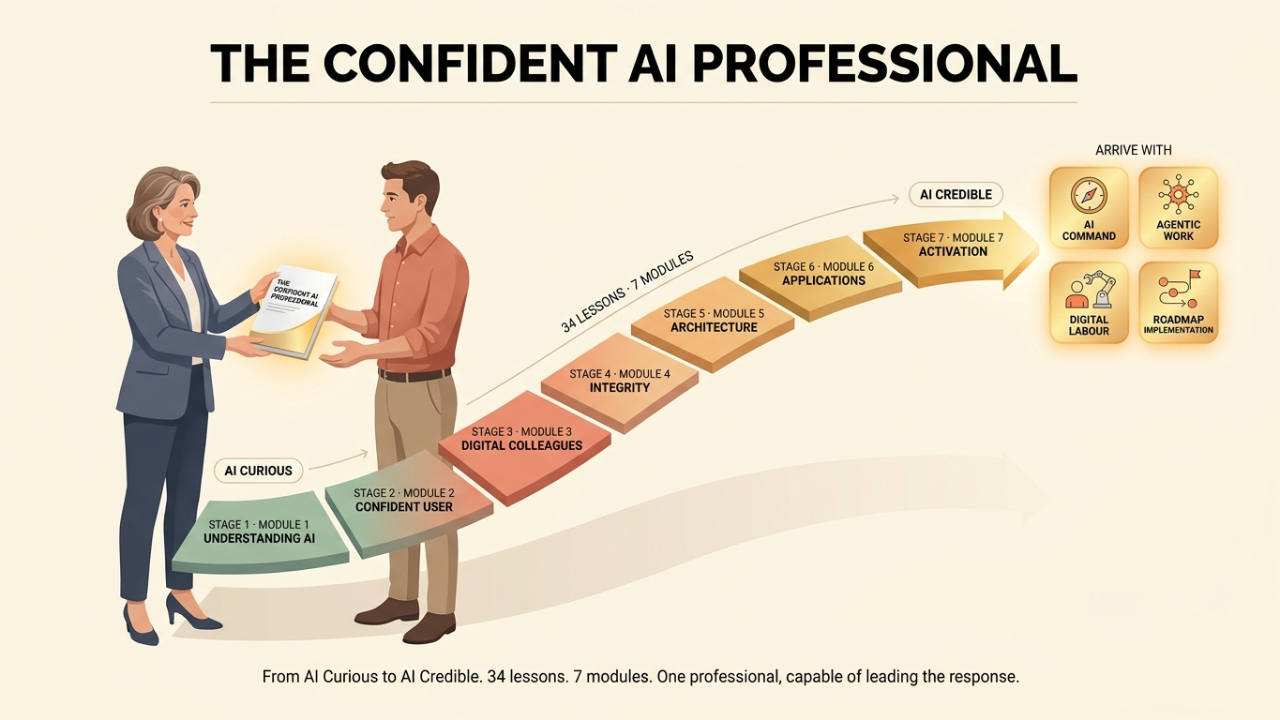
As of February 2026, AI is a named work health and safety hazard in New South Wales. That single fact changes what safety and compliance training has to cover — and most current programs aren't built for it.
The Work Health and Safety Amendment (Digital Work Systems) Act 2026 makes NSW the first Australian jurisdiction to expressly fold AI, automation and algorithmic systems into the primary duty of care. The duty took effect on assent. Your obligation to ensure a worker's health isn't put at risk now explicitly extends to the "digital work systems" allocating their work, scheduling their shifts, and scoring their performance. This is no longer a forward-looking governance question. It is an operating obligation that safety and compliance leaders already carry.
So the relevant question for Heads of WHS, Wellbeing and Safeguarding is not whether to train teams on AI. It's what to actually teach. Generic "intro to AI" content won't discharge a WHS duty. Here is what a credible program covers.
Teach the duty, not the technology
Most AI training for staff is built around tools — how to prompt, where the chat box lives, which assistant is approved. That content has its place, but it is the wrong altitude for a compliance audience. A safety leader doesn't need to know how a model is trained. They need to know where the legal duty now sits and how to recognise when a digital system is creating a foreseeable risk.
That means teaching the specific obligations: the expanded duty of care under the NSW amendment, the requirement to consult workers about digital systems that affect them, and the way AI now intersects with the psychosocial hazard rules that are enforceable in every Australian jurisdiction. Automated rostering that produces unsafe fatigue patterns, algorithmic performance monitoring that drives chronic stress, opaque work allocation that strips worker autonomy — these are the hazards regulators have named. Your safety leaders should be able to spot them by structure, not by brand.
Teach risk assessment that survives an audit
The discipline that compliance leaders already own — hazard identification, risk assessment, control hierarchy — transfers directly to AI. It just has to be pointed at a new class of system. A defensible program teaches teams to ask a consistent set of questions of any digital work system: What decision is it making? Who does that decision land on? What happens when it's wrong? Who is accountable, and can we explain the outcome to a worker or a regulator?
This is where the Voluntary AI Safety Standard and the National AI Centre's six essential practices give you a ready-made scaffold. They're voluntary today, but they describe what a regulator's reasonable-steps test will look like tomorrow. Training that maps your existing risk framework onto those practices produces something structurally defensible — an honest read of where each system sits, and a documented basis for the controls you've applied.
Teach the difference between tasks and judgement
Not every AI use carries the same risk, and a program that treats them identically wastes everyone's attention. The useful distinction is between the work that can be automated and the work that demands accountable human judgement. We frame this through Atoms and Electrons: the analytical move that separates work which can move at machine speed from work where a human must remain answerable.
For a safety and compliance function, that line is the whole game. Logging an incident, retrieving a procedure, drafting a first-pass report — these are candidates for Digital Labour. Determining whether a hazard is acceptable, signing off a return-to-work plan, deciding that a worker is fit for duty — these stay with an accountable person. Teaching staff to draw that line themselves, against the AI Work Spectrum, is what prevents both reckless automation and reflexive avoidance.
Teach governed use, not prohibition
The instinct in a risk-averse function is to ban the tools and move on. That doesn't hold. Staff are already using consumer AI to draft reports and summarise legislation, with or without permission. A prohibition you can't enforce isn't a control — it's an exposure. KPMG and the University of Melbourne found that AI use across Australian workforces is already high while trust and literacy remain highly variable, with only 30 per cent of Australians confident current regulation makes AI use safe.
The credible response is governed use: approved tools, clear boundaries, and a workforce that understands why the boundaries exist. That's the gap a real training program closes. It's also why the Commonwealth is training 200,000 public servants rather than restricting them — capability is the control.
What good actually looks like
Good AI training for safety and compliance leaders isn't a one-hour awareness module. It produces people who can read a digital work system the way they read any other hazard, apply the existing risk discipline to it, draw the line between automatable task and accountable judgement, and document a defensible basis for every call. Not a slide deck. Not a policy PDF. Capability that holds up when SafeWork asks what reasonable steps you took.
This is exactly what The Confident AI Professional is built to deliver — function-altitude AI literacy for the people who carry the duty, grounded in the Australian regulatory anchors that now apply.
If your WHS, wellbeing or safeguarding leaders would struggle to assess an AI rostering system against your duty of care today, that's the gap to close first. Start by reviewing The Confident AI Professional and mapping its modules to the roles that already hold WHS accountability in your organisation.