Microsoft Copilot Studio at Function Scale — What Good Actually Looks Like
Jun 24, 2026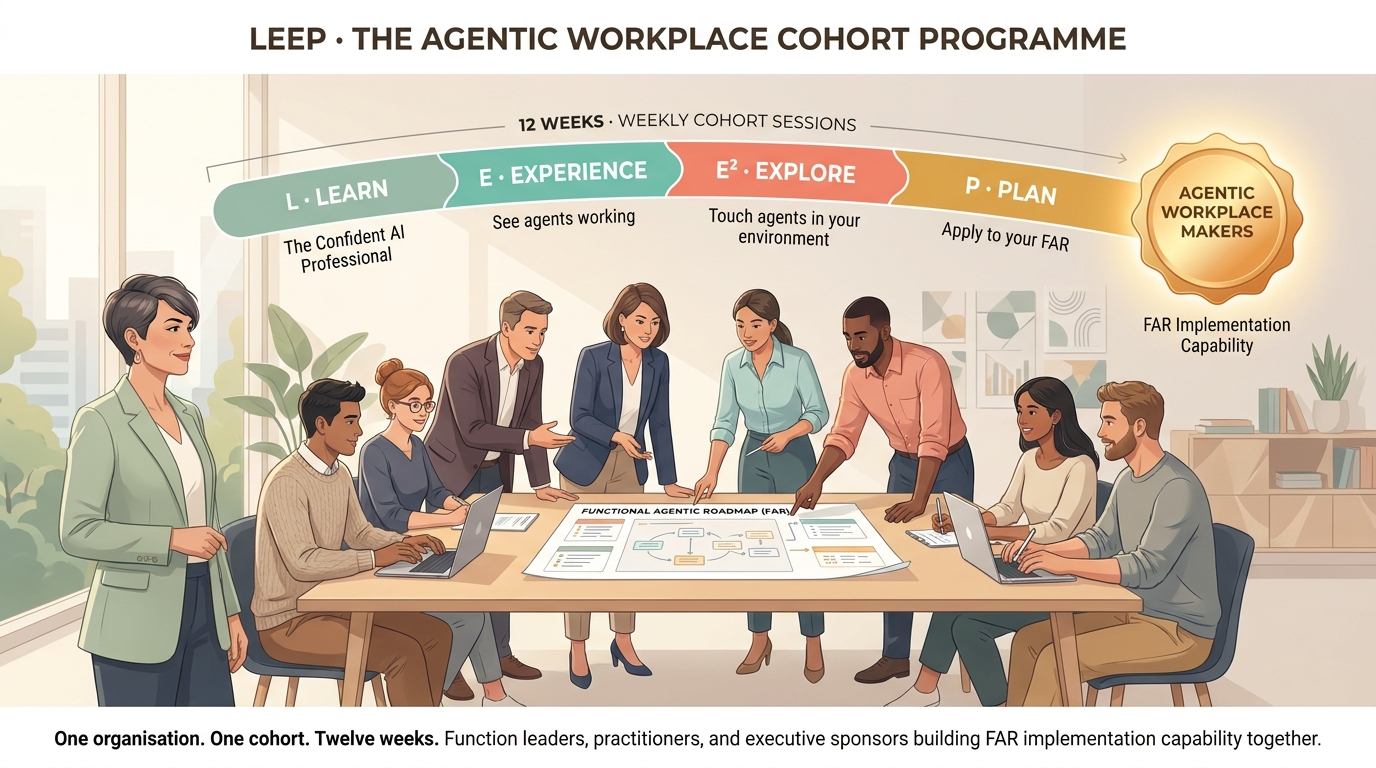
Microsoft has stopped pretending Copilot Studio is a chatbot builder. The May 2026 release recast the product as a governed enterprise agent platform — orchestration, lifecycle management, computer-using agents, real-time voice. The capability is no longer the constraint. What good looks like at function scale is.
Most organisations are reading Copilot Studio at the wrong altitude. They read it as a maker tool — something individuals spin up to build a bot — or as a whole-of-organisation platform decision that lives with IT. Neither altitude is where the product earns its keep. Copilot Studio enterprise value is decided at the function: HR, claims, contact centre, safety, safeguarding. That is where governance, cost-to-serve, and service responsiveness are actually measured, and where a governed agent either becomes Digital Labour or stays a demo.
Maker sprawl is not a strategy. It's the shadow AI you'll regret.
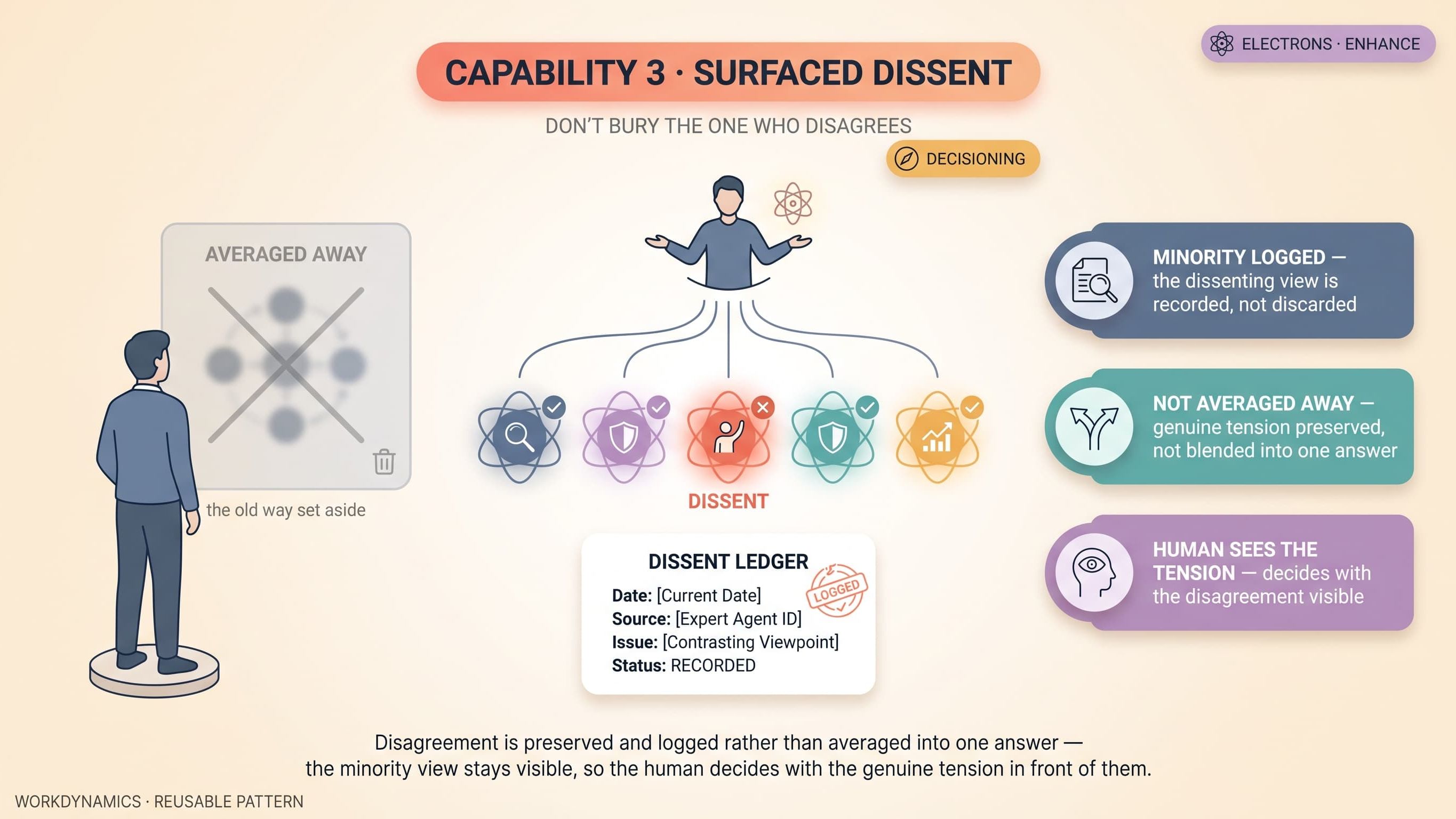
Hand Copilot Studio to a thousand makers and you get a thousand ungoverned agents. Microsoft has effectively conceded the point. The April and May 2026 updates are dominated not by new authoring features but by governance: PowerShell cmdlets and Graph API endpoints to manage agents at scale, an extensible agent governance dashboard, security-posture surfacing in the authoring experience, and bulk policy assignment across the agent estate. As one security write-up put it, Microsoft has turned Copilot Studio into an AI agent control centre.
A control centre only matters if someone is accountable for what it governs. At the individual altitude, no one is. At the whole-organisation altitude, accountability is too diffuse to act on. At function altitude, there is a function head with a cost structure, a regulator, and a service obligation — someone who can own the agents, defend the spend, and answer for the risk. That is the altitude at which Copilot Studio governance becomes real rather than theatrical.
What good actually looks like: governed agents on the electrons
The discipline that makes a Copilot Studio deployment defensible is the same one that makes any agentic build defensible: the Atoms and Electrons split. Atoms are the work whose value depends on being human — the high-stakes conversation, the considered judgment, the relationship that holds a customer or protects a child. Electrons are the work where the value is in the output, not the doer — triage, routing, information assembly, reporting, the handoffs between systems.
Good Copilot Studio at function scale puts agents on the electrons and leaves the atoms to the humans. Not agents everywhere. Not a copilot bolted onto every screen. Agents deployed against the specific workflows where the value is in the output, governed inside the function, with the human judgment protected rather than automated away.
This is the difference between an impressive demo and deployed Digital Labour. The demo shows an agent that can do anything. The function-scale build shows an agent doing the right things — the electrons — with audit-grade evidence and a human in the loop wherever the work is irreducibly human.
Two production examples, in Australian tenants
This is not a hypothesis. We operate governed Copilot Studio agents in Australian customer tenancies today, across two AI-native applications built on Microsoft Power Platform — Dataverse, Copilot Studio, Power Apps, and Power Automate.
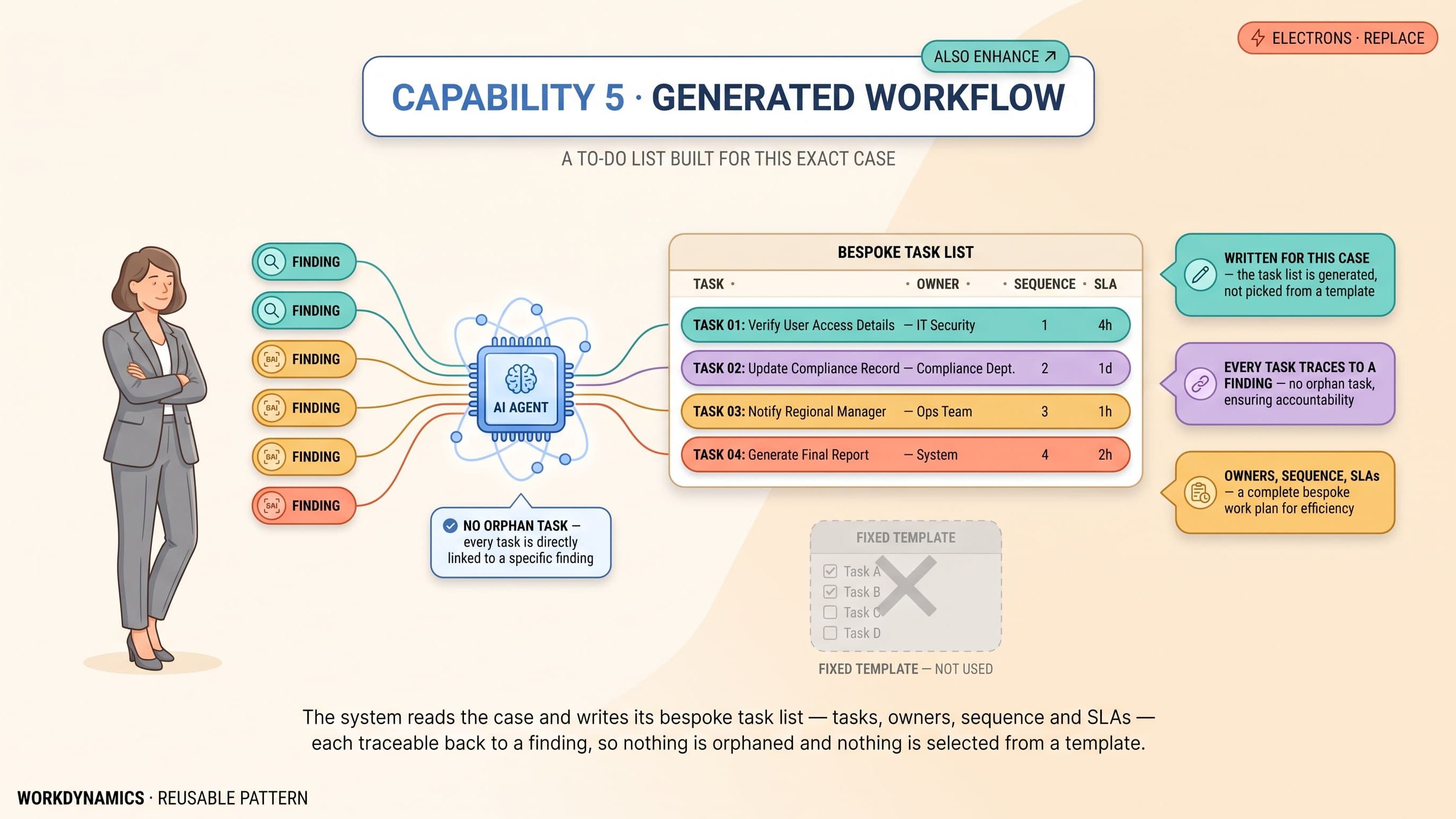
Injury Guard AI is Digital Labour for WHS and injury management functions. Agent Nova handles frontline injury and hazard reporting; Agent Riley triages events, prioritises caseloads, and manages the back-office workflow against service levels. The electrons — reporting, triage, routing, TOOCs classification, return-to-work administration — run as governed agents. The atoms — the case conversation, the judgment call, the relationship with an injured worker — stay with the case manager. The data stays in the customer's tenancy. The governance posture stays the customer's own.
Safe Havens AI is Digital Labour for child-safe organisations, aligned to Child Safe Standards 6, 7 and 10. Agent AVA guides mandatory reporters through disclosures with an audit-grade structure, while the triage engine classifies allegations as reportable, not reportable, or non-jurisdictional. The safeguarding judgment — the work that defines child protection — stays human. The documentation, the SLA tracking, the evidence assembly run as governed agents underneath.
Same platform. Same governed-agent discipline. Two completely different functions, each with its own regulator and its own atoms profile. That is what Copilot Studio at function scale looks like when it's built as a discipline rather than a demo.
The governance the platform doesn't give you
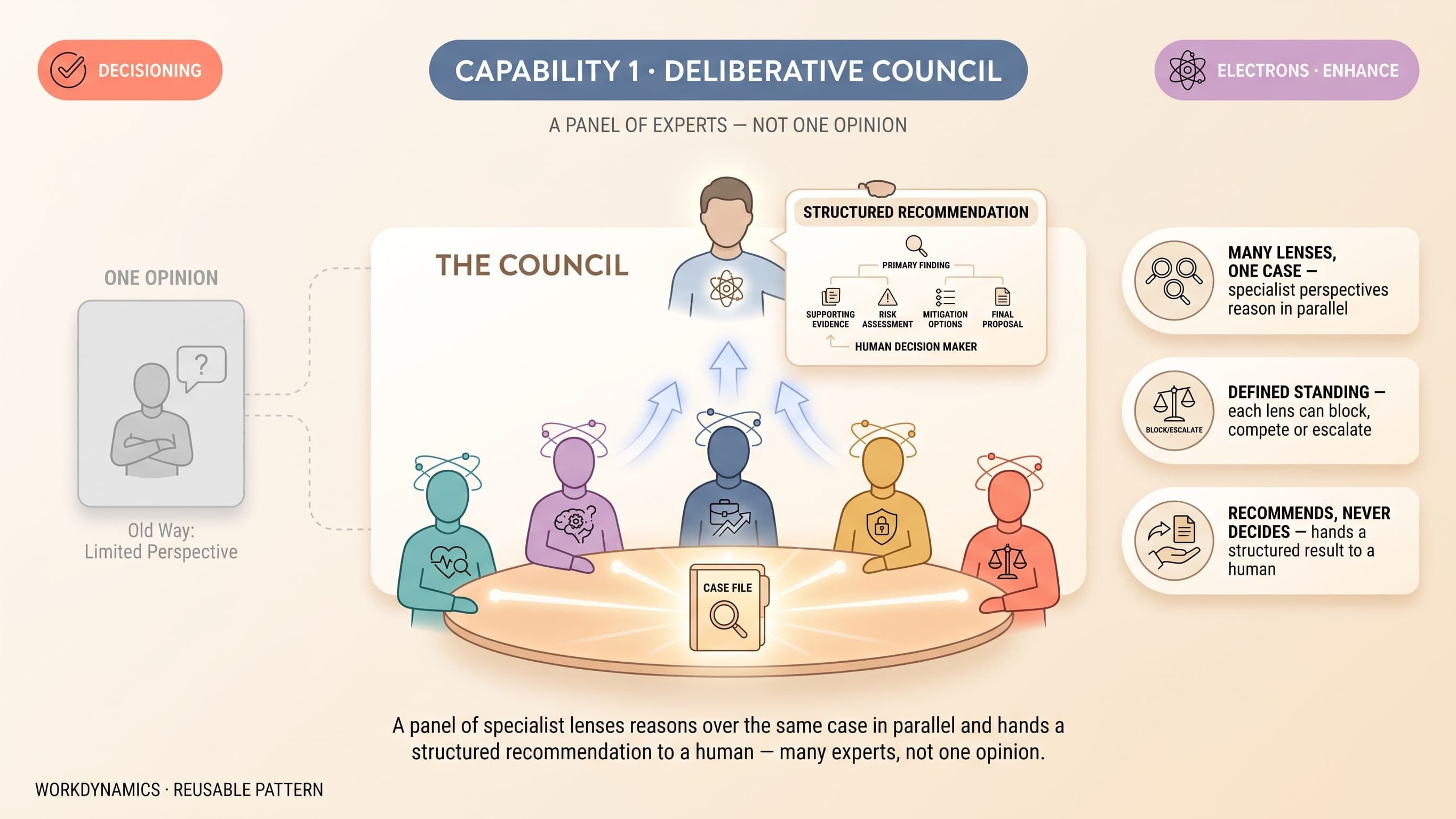
Copilot Studio now ships the controls. It does not ship the decision about what to govern. The agent governance dashboard tells you the security posture of every agent in the estate; it does not tell you which agents should exist, which workflows are electrons, and where a human must stay in the loop. That is a function-level analytical judgment, not a platform setting.
It is also increasingly a regulatory expectation. The Australian Government's Technical Standard for Government's Use of Artificial Intelligence, now extended with an agentic AI addendum, sets the direction private-sector boards should read closely: designated accountability for each AI use case, risk-based controls at the use-case level, and assurance across the whole AI lifecycle. The platform's control centre satisfies the "how." Function altitude is where you answer the "who is accountable" and "for which workflow" — the questions a board actually signs off on.
The next concrete step
If your Copilot Studio estate is a scatter of maker bots with no function-level accountability, the fix is not more authoring. It's activation. LEEP is our 12-week organisational cohort programme that turns a function-altitude blueprint into governed, deployed Digital Labour — the same discipline that runs Injury Guard AI and Safe Havens AI in production today. It puts your function heads in command of how agents operate inside their teams, with governance and audit-ready evidence built in from the first build, not bolted on after the sprawl.
Start there. Pick one function, read its work through atoms and electrons, and stand up Copilot Studio agents on the electrons — governed, accountable, defensible. That is what good actually looks like.
See how LEEP turns a blueprint into deployed Digital Labour →