AI as a New Capability Layer for Work
Feb 16, 2026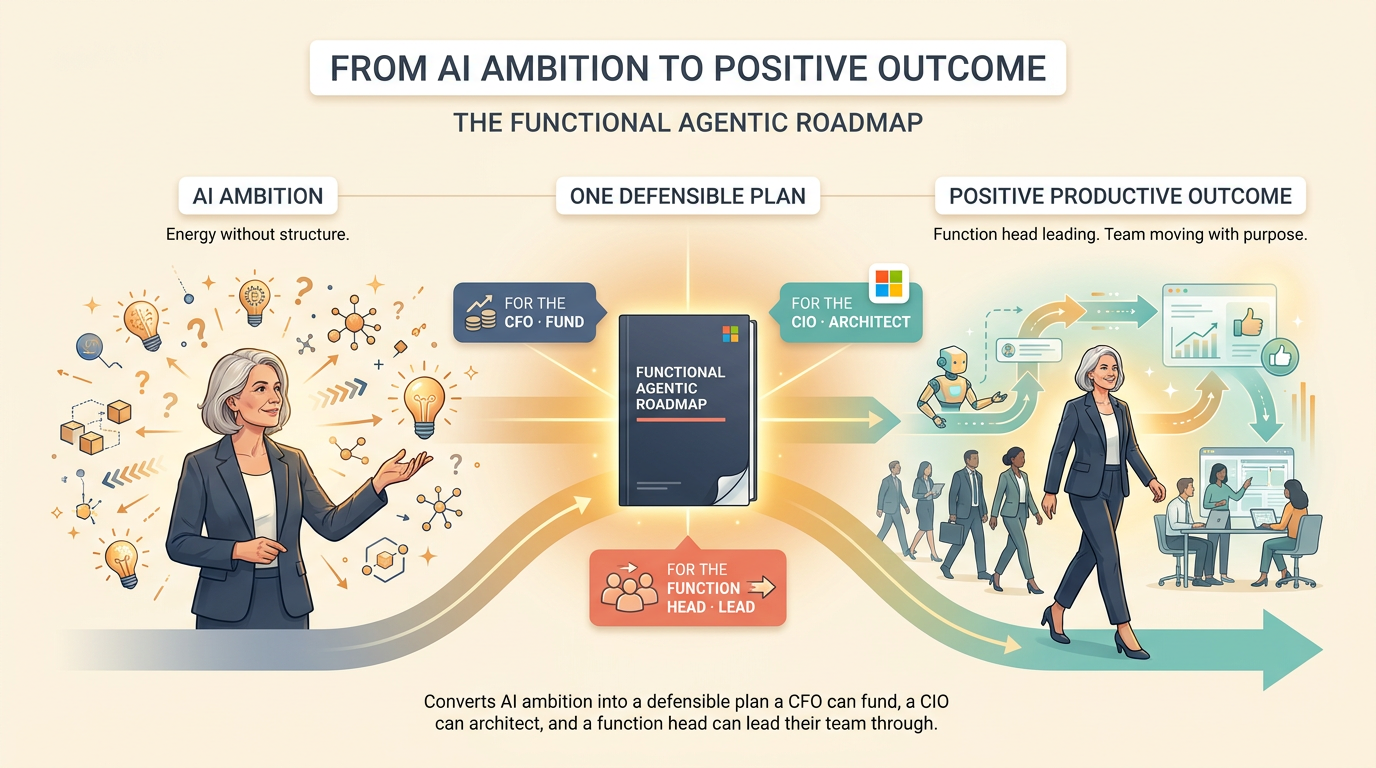
Why AI Has Become a Strategic Capability for C‑Suite Leaders
Most executive teams are contending with the same pressures in employee services: rising complexity, stricter compliance, higher service expectations, and fragmented experiences spread across multiple systems. HR, WHS, Corporate Services and People & Culture leaders are asked to do more, do it faster, and carry greater risk—without adding headcount. Traditional responses—new forms, another workflow, a bigger portal—barely move the needle because the constraints are structural. The system only acts on what it is told; it does not reason.
This is why AI has crossed an important threshold. It is no longer “another tool in the stack”. It has become a strategic capability layer for work itself. Instead of hard‑coding every step, we can now embed adaptive intelligence that understands context, weighs options, applies policy, and takes the next best action—consistently, at scale, and with human supervision where it matters. For executive teams, that means shifting from incremental automation to a new operating model for service delivery: AI‑enabled employee services that scale capacity without headcount, improve decision quality, and lift the employee experience.
From Tools to Intelligence: AI as the Backbone of Modern Employee Services
The shift is not about ripping out platforms. It is about adding an intelligence layer that works across them. Agentic systems—AI that can interpret signals, plan actions, and coordinate tasks—sit above your existing systems and introduce reasoning, adaptation, and memory. They connect to HRIS, case management, learning, and safety systems; they read policy; they respect permissions; and they move work forward. This backbone turns your systems of record into systems of action.
This capability layer is what enables digital labour. Rather than teams manually shepherding every case from start to finish, digital coworkers take on well‑bounded, policy‑constrained work: monitoring SLAs and risk thresholds; preparing drafts and decisions for human review; coordinating stakeholders; and personalising guidance for employees and managers. Critically, the intelligence is separated from the user interface and the database. That separation allows you to modernise service delivery without a disruptive platform replacement and to progressively expand agent capabilities as your governance, confidence, and value grow.
What Agentic Systems Do That Traditional Systems Can’t
Agentic systems change the nature of work because they can fuse policy, data, and human context in real time—and then act. Consider an employee injury scenario. A recovery agent generates a personalised plan by synthesising medical restrictions, psychological readiness, job requirements, and organisational policy. It proposes the next safe duties, schedules check‑ins aligned to clinical milestones, and flags psychosocial risk indicators for a human case manager to review. The plan is living; as new information arrives, the agent adapts cadence, duties, and escalation pathways.
In learning and capability development, an adaptive learning agent observes performance patterns and engagement signals, then adjusts the path accordingly. When a manager struggles with a leadership module but excels in policy knowledge, the agent recalibrates content depth and practice drills, shortens cycles where mastery is clear, and extends them where support is needed. The experience is dynamic and personal, yet remains anchored to enterprise standards.
Sensitive reporting is another area where agents outperform static systems. A wellbeing and safety agent can guide an employee through a difficult disclosure with empathy, consistent language, and clear options that meet cultural, psychological, and legal requirements. It ensures the person understands confidentiality boundaries, triages immediate risks, and collects only the necessary information—no more, no less—before handing off to the right human team with a complete, auditable record.
Return‑to‑work decisions often stall because data is scattered, roles are ambiguous, and next steps are unclear. An agent synthesises medical certificates, psychological factors, duty statements, and roster constraints to propose a step‑wise return plan that is safe, compliant, and feasible. It adapts as the employee progresses, reducing cognitive load on coordinators and line managers while documenting rationale against policy.
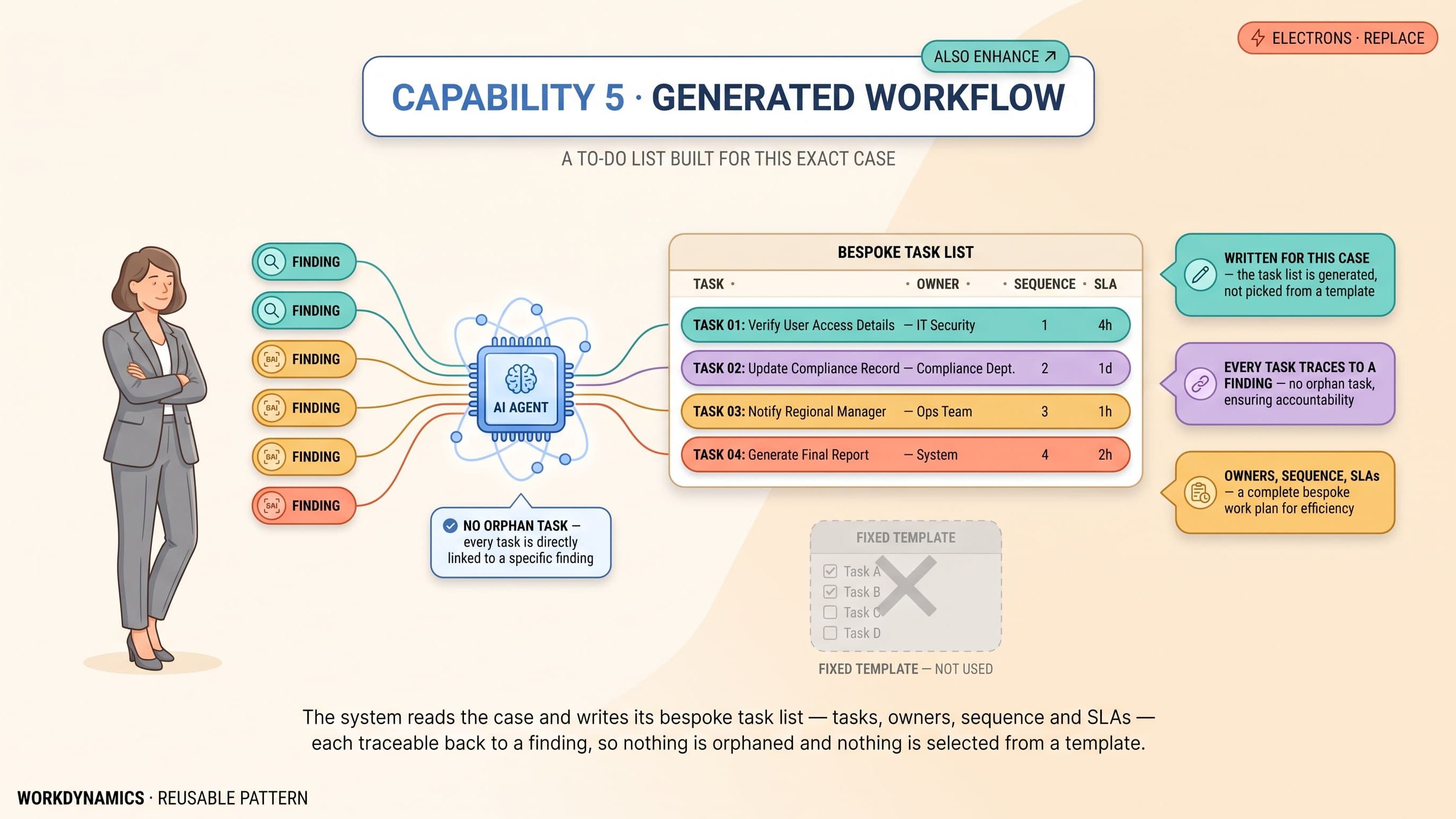
In case management, an intelligent agent triages new cases by risk, role, and incident type, then dynamically adjusts the workflow. A senior manager’s incident with potential media interest is handled differently to a minor hazard report in a low‑risk site. The agent assembles the right checklist, proposes communications, and tracks deadlines and dependencies. Instead of a one‑size‑fits‑all process, you get intelligent pathways that reflect reality while maintaining governance and fairness.
Digital Labour and the Future of People‑Centred Service Delivery
Digital labour is not just about speed. It is about capacity, consistency, and empathy working together. Turnaround times fall because agents handle monitoring, preparation, and follow‑through. Employee experience improves because guidance is timely, contextual, and human‑centred. Service precision increases as agents use policy and evidence to recommend the next best step rather than pushing everyone through the same tunnel. Fairness improves because the same rules are applied the same way, with transparent reasoning and auditability. Staff are freed from the cognitive load of tracking every SLA, policy nuance, and follow‑up so they can focus on higher‑value work—coaching, complex decisions, and care.
In practice, that looks like SLA‑aware agents escalating a high‑risk case before it slips. It looks like hyper‑personalised journeys where a new parent receives tailored flexibility options that align with policy and team capacity, not a generic checklist. It looks like sensitive reporting agents giving employees culturally safe, guided pathways for raising concerns—protecting both people and the organisation. These are not speculative prototypes. They are the natural outcomes when you introduce AI as a capability layer for work, especially in AI‑enabled employee services where context, policy, and human outcomes must align.
Why AI Unlocks a New Domain of Workplace Innovation
Separating intelligence from legacy systems opens a new domain of innovation. Processes can be redesigned at the level of goals and outcomes rather than forms and fields. Because agentic systems are model‑driven and policy‑aware, they can be iterated quickly: adjust a rule, tune a prompt, refine an escalation—and the behaviour improves without a major replatform. For many organisations, this is the first time service design has been genuinely agile.
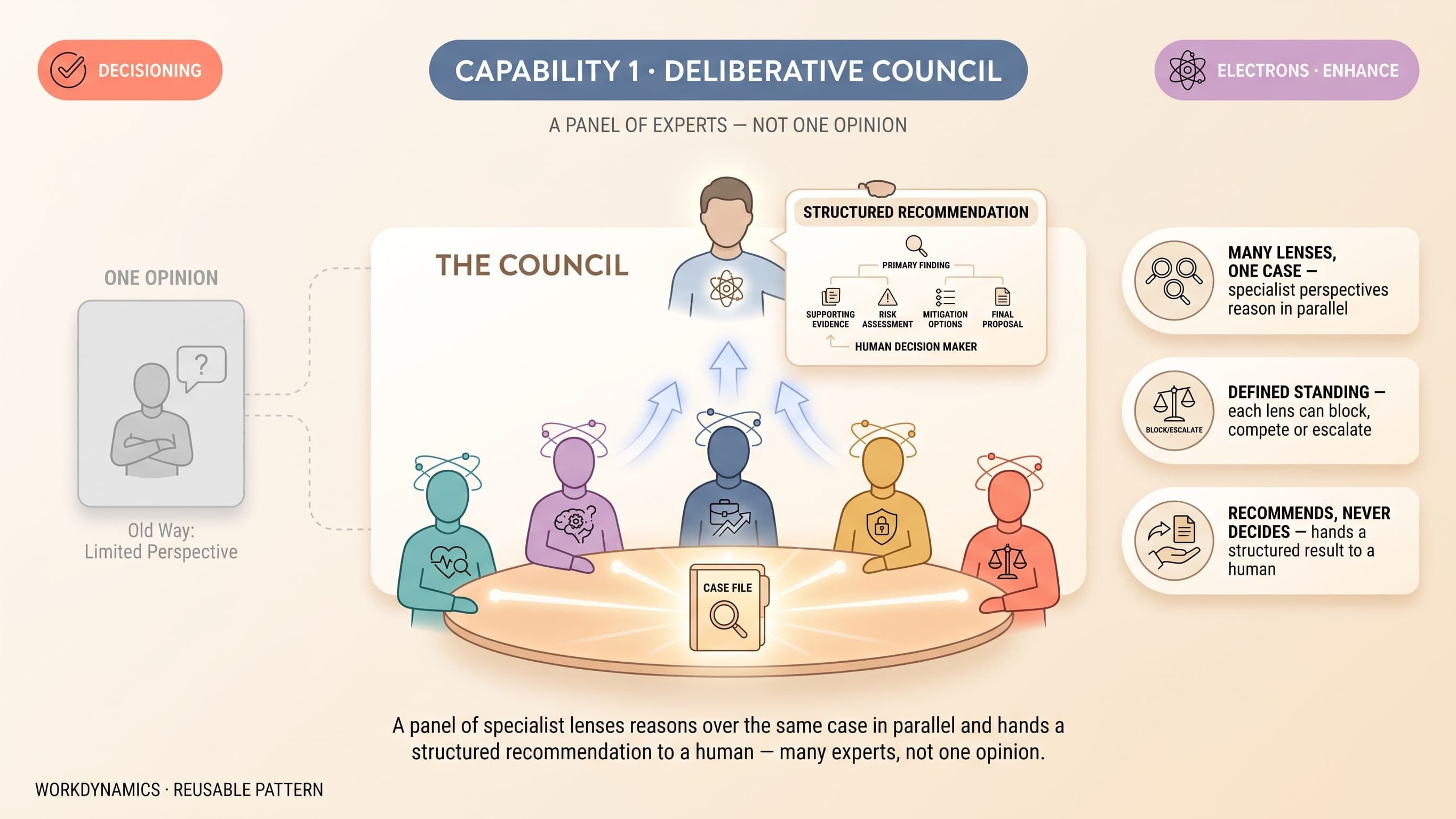
Next‑generation agents make this practical. They can reason over multiple data sources, coordinate multi‑step activities, and reflect on outcomes to improve performance within governance boundaries. At the same time, “agent makers” empower non‑technical experts to shape behaviour without writing code. HR and WHS leaders can configure decision policies, thresholds, and templates; frontline managers can propose conversation flows and micro‑journeys; governance teams can embed compliance and audit at the core. Model Context Protocol (MCP) becomes the new capability plane—standardising how agents access tools, data, and context—so you can scale innovation safely across business units.
The result is a step change in how quickly you can modernise employee services with AI. Instead of year‑long rebuilds, you deliver measured improvements in weeks, learn from real usage, and extend capability progressively. You retain the systems of record that work while replacing brittle workflows with adaptable, intelligent pathways.
How LEEP Helps Executives Move From Theory to Action
For boards and executive teams, the question is less “if” and more “how” to adopt AI workplace modernisation responsibly. The risk is not experimentation; the risk is ad‑hoc adoption without literacy, governance, or a clear path to value. That is why we designed LEEP—the low‑risk pathway to implementing AI as a capability layer for work.
LEEP builds literacy across your leadership team so decisions are informed and aligned. It provides exposure to digital coworkers and agentic systems in real scenarios, using executive‑readable examples from HR and WHS such as personalised recovery planning, adaptive learning, intelligent case management, and sensitive reporting. It supports safe experimentation so you can trial AI‑enabled employee services in a controlled domain with humans‑in‑the‑loop (HITL), governance‑by‑design, and full audit trails. And it culminates in a realistic implementation plan that targets measurable outcomes—reducing turnaround times, increasing service precision, improving employee experience, ensuring fairness and consistency, and scaling capacity without headcount.
Under the hood, agents enforce policy rules, log actions, and maintain auditable decisions from the start. Humans supervise, review, and refine behaviour. MCP provides the scalable capability plane across your systems so you can expand thoughtfully. You are not betting the farm on a platform migration. You are building a new capability layer for work—one that strengthens your risk posture, protects your people, and unlocks a more responsive, people‑centred service model.
Call to action
If your service model still relies on manual shepherding, rigid workflows, and fragmented experiences, you are carrying cost, risk, and frustration you no longer need. Rethink the model. Treat AI not as a tool but as a capability layer for work—one that delivers digital labour, agentic systems, and compassionate, scalable services. If you are ready to move from theory to action, LEEP provides the structured, low‑risk pathway to modernising employee services with AI. Let’s start where value is clearest, prove outcomes quickly, and build the intelligence that your organisation—and your people—deserve.