The Agentic Operancy Project · Free leadership primer
Know your AI Exposure. Command your agentic future.
Every function quietly gives up work because people are scarce: reviews sampled, plans set from a template, signals nobody had time to notice. Agentic work can now end that, not just at the desk but in how your function delivers its services. This free primer is for leaders, technical or not, who run services on systems of record. It shows what your function gives up, reads where it stands, and ends in decisions you can sign.
See it. Read it. Own it.
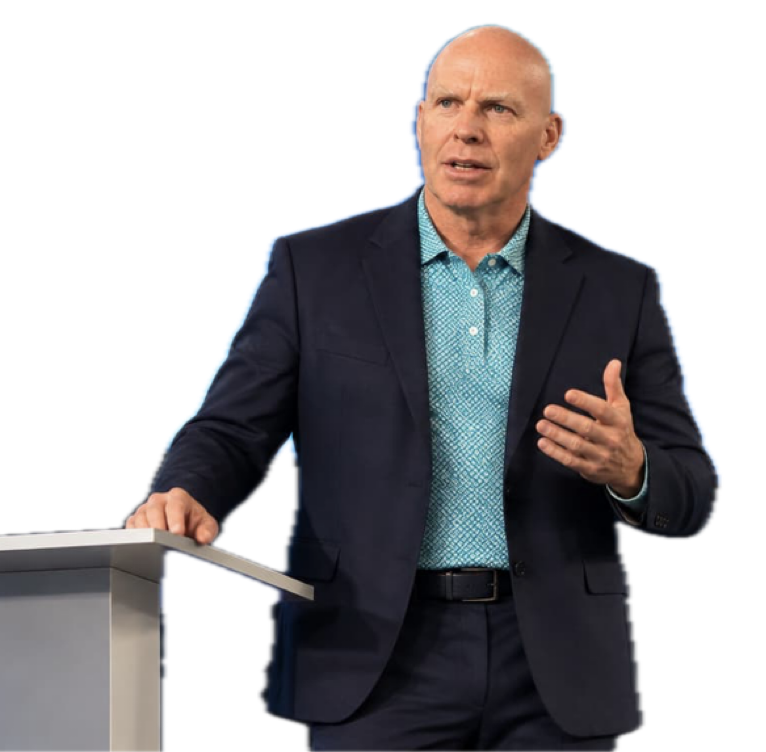
A note from the founder
AI is already on the desk. The real change is in the function.
AI already guides our traffic, recommends what we watch, monitors our health and answers our questions. At work, most organisations have stopped at the desk: one person writing and searching a little faster. Useful, but it isn't where the change lies.
I've spent twenty-five years building systems of record for the people who run claims, cases, customer contact and internal services. I know what those systems ration, because I built the rationing in.
When agentic systems arrived, my team built Injury Guard AI and Safe Havens AI end to end: intake, triage, per-case tasks and sign-off, on the Microsoft AI stack. For a 30-person injury management function, the roadmap we built modelled a 220% three-year return and a 16-month payback.
That's where agentic work pays off: not at the desk, but in the function, on the systems of record where agents and people deliver the service together.
I wrote this primer so you can take command of that change in your own function, not inherit someone else's version of it.
That's what I call agentic operancy: agentic work running in your function, under your command, not sitting at the desk.
The problem
Two questions are heading your way. Desk AI can’t answer either.
The CFO
“We’ve spent on AI. What did we get for it?”
The CEO
“How do we lock this in across teams?”
Most leaders answer with stories from the desk: emails drafted faster, reports summarised, meetings minuted. All true. None of it answers the question, because neither question is about the desk. Both are about how the function runs.
The return sits in the function. In the cases that got a template instead of thinking, the files nobody reviewed, the follow-ups nobody made. That’s your AI Exposure, and almost no function has ever counted it.
What’s inside
Everything you need to read your function, in one private login.
Twenty short lessons that walk you through four resources. Every lesson ends with an exercise on your own function.
Briefings
Leaders Notes
One-page A4 reference cards, each paired with a story-led briefing on rationing, exposure and the leadership shift.
eBooks
Command Notes volumes
Why it matters, what an agentic system really is, and how to run one. Guided section by section.
Assessment
The exposure check
Eight questions on one function. An instant reading of where it sits and how much it still rations.
Workbook
Owning Your AI Exposure
Map the work, pick your priorities, decide each one, and sign a statement you can take to your executive.
Plus Module 1 of AI Command Foundations, free, in the same library.
How it works
Four modules, in order. Each one earns the next.
01 · See it
The Leader’s Briefing
Find the rationing hiding in a good day, and what it’s costing your function.
02 · Understand it
Command Notes
Tell an agentic system from an AI button, and learn what governing one asks of you.
03 · Read it
Read Your Exposure
Take the 10-minute check and read your stage and four forfeit loads.
04 · Own it
Own Your Exposure
Work through the Workbook and end with decisions in writing.
Rationing → Exposure → Reading → Decision
The idea underneath
Rationing used to be physics. Now it’s a choice, and a choice has an owner.
For thirty years no function could give every case proper thought, review every file or watch every signal. There were only so many people, so nobody owned the gap.
In functions that run on systems of record, agentic systems can now carry that work end to end, with people on the judgment. Once a compromise can be ended, keeping it is a decision. This primer makes yours deliberate and puts them in writing.
What it looks like at the end
One manager’s Workbook, start to finish.
An injury management team: four case managers, about 120 open claims, one claims app. Copilot had made everyone faster at the desk. The function ran exactly as before.
“That used to be physics; it is now a choice, and it costs us longer claims, wrong calls and drifting workers. I own these decisions and will revisit them by 30 June 2027.”
The worked example in the Workbook. The function and figures are illustrative.
Who it’s for
For leaders who own a function, or approve what it spends on AI.
This is for you if
- You run operations, claims, cases, contact or another function that lives in a system of record
- You sign off, or answer for, what your function spends on AI
- You’ve rolled out desk AI and can’t yet show the function runs differently
- You want evidence before the next budget conversation
No technical knowledge needed.
You’ll walk away with
- Your function’s compromises, written down and sorted
- An exposure reading: your stage and four forfeit loads
- Three to five priorities, each decided: release, protect or keep
- A signed exposure statement for your executive or board
The Agentic Operancy Project · Step 1
Your function’s exposure is there whether you read it or not.
Free, private and yours to keep. No sales call to get in, nothing to buy to finish.
Start the free primerSee it. Read it. Own it.